Accomplishments from the Conservation Partners Program (2022 – 2025) Sophia Sorboro, Ohio Partner Biologist, Pollinator Partnership
Published April 30, 2026
As you may be aware, grants and donations are the life blood of non-profits. It’s through the support of our funders, donors, and partners that Pollinator Partnership (P2) is able to employ our amazing staff and carry out our organizational mission to promote the health of pollinators, critical to food and ecosystems, through conservation, education, and research. In this blog post, I’m excited to tell you about one of our recent grants, what it allowed us to achieve, and how we’re leveraging those successes to further our impact!
Pollinator Partnership’s Conservation Partners Program Grant
In 2022, Pollinator Partnership (P2) was awarded funding through the National Fish and Wildlife Foundation’s (NFWF) competitive Conservation Partners Program (CPP) grant fund. Thanks to NFWF’s financial support through this CPP grant, we’ve had the opportunity to expand our Partner Biologist team and provide hands-on assistance to Ohio and Indiana’s agricultural and conservation communities for the last three years.
Our CPP grant ran from 2022 – 2025 and allowed P2 to work closely with the USDA’s Natural Resources Conservation Service (NRCS) to increase capacity in Indiana and Ohio for engaging farmers and landowners about pollinator conservation and assisting them with the implementation of pollinator / wildlife conservation projects on their land.
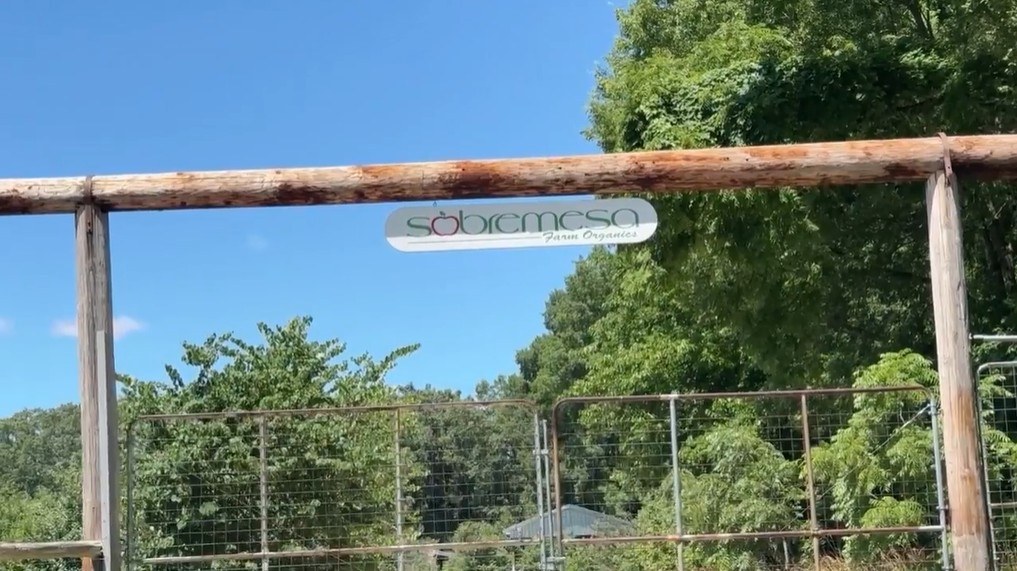
Sobremesa Farm sign.
Outcomes and Achievements
Thanks to NFWF, P2 was able to expand our team and hire two full-time Partner Biologists to help agricultural landowners and producers with their pollinator projects and questions; one in Ohio (me!) and one in Indiana. As a P2 Partner Biologist, my primary duties are to provide pollinator focused education and technical assistance to Ohio’s farming community. Now, to serve the agricultural community, they need to know a.) we exist and b.) that there are programs and resources available that can help them plan and implement habitat and other pollinator-supporting practices on their lands. We set out to achieve this by creating short-form educational videos, holding training workshops, and providing habitat planning technical assistance and helping folks navigate NRCS and other financial assistance opportunities that are available to help land stewards make their conservation goals a reality.
When writing a grant proposal, you not only have to outline what you’re going to do, but you also have to set goals and estimate your impact. I’m thrilled to share that over the course of our grant period and with the support of many wonderful partners, we met every goal set forth at the beginning of the program and exceeded most of them!
Education and Outreach
- Partner Biologists (PBs) reached 151 people by hosting four pollinator training workshops and supporting four partner events throughout Ohio and Indiana. This exceeded our goal of educating 120 people!
- P2 staff created a subscribable communications campaign, Working for Wildlife, and newsletter to help disseminate the conservation practice videos and Habitat Heroes interviews!
- P2 successfully created and disseminated ten videos that interpret Farm Bill conservation practices that can be used to create or enhance habitat for wildlife! The videos averaged five minutes in length and covered the following topics:
- PBs successfully identified and interviewed six Habitat Heroes throughout Indiana and Ohio! PBs coordinated with the Natural Resources Conservation Service (NRCS) and other conservation partners to identify a variety of farmers with a diverse background who have implemented pollinator-supporting practices within their operation and talk with them about their experience. These interviews allowed each farmer to tell their unique habitat story with the goal of inspiring others to see what may be possible on their farm. The videos also featured a mix of small-scale, organic, non-profit, and traditional operations. The featured Habitat Heroes are:
Technical Assistance
- The creation of 53 wildlife-supporting conservation plans and applications for Farm Bill programs like the Environmental Quality Incentives Program (EQIP), Conservation Stewardship Program (CSP), and Conservation Reserve Program (CRP). Of the 53 applications submitted to Farm Bill programs, 43 were approved and received federal financial assistance! This assistance removed economic barriers and helped turn conservation plans into conservation actions.
- Partner Biologists created and / or assisted with 73 management plans throughout the grant period!
- Partner Biologists contributed to the restoration of 282.8 acres of grasslands that will support monarchs and other wildlife of concern.
- In total, Partner Biologists provided support to a total of 1,399.9 acres! This includes 768.6 acres entered into applications and / or enrollment for Farm Bill funding, 543.4 acres with management outside of Farm Bill programs, and 87.8 acres of enhancements or other support for existing Farm Bill program contracts.
What’s Next?
P2’s Indiana and Ohio Partner Biologists are not done yet! Although this grant has come to an end, there is more work to be done. We are thrilled to share that through another competitive NFWF grant program, Pollinator Partnership has received additional funding to keep these positions going! As a result, for the next three years, the Partner Biologists will continue to create educational materials and host / support events and will have a special focus on on-farm and in-forest pollinator-friendly assistance to any producers or landowners throughout Ohio and Indiana who request it.
To request information or learn more about pollinator conservation opportunities through Farm Bill programs, complete the appropriate form below:
P2 Partner Biologist contact information and coverage areas:
- Emily Carlson (Western US) - ecarlson@pollinator.org
- Isabel Nazarian (Midwestern US) - isabel@pollinator.org
- Lacey Smith (Northeastern US) - lacey@pollinator.org
- Sophia Sorboro (Ohio) - sophia@pollinator.org
- Ella Stroh (Indiana) - estroh@pollinator.org