Natural Enemies in Pollinator Habitat by Ella Stroh, Indiana Partner Biologist, Pollinator Partnership
Insects interact with our lives in many ways. When an insect has a behavior that we do not like (for example, eating our tomato plants), we deem it a “pest”. When an insect has a behavior that benefits us, we call it a “beneficial insect”. Pollinators like bees and butterflies are examples of beneficial insects because they pollinate many of the fruits and vegetables that we eat. “Natural enemies” are another type of beneficial insect— they provide pest control services by preying on pest insects. In the context of agriculture, natural enemies can help keep pest populations in check and protect crop production. Fruit and vegetable crops (also called specialty crops) have many pests that natural enemies prey upon.
Just like pests and pollinators, natural enemies come in many different shapes and sizes. Understanding the role that they play in agriculture is key to enacting management practices that can support pollinators and natural enemies alike, resulting in more resilient and healthy production systems. Several common types of natural enemies are described below, along with their contributions to pest control.
Natural Enemy Profiles
Lady beetles
North America is home to both native and non-native species of lady beetles. Both types provide important pest control services, but some of the introduced lady beetles tend to be more numerous than their native counterparts. Check out the “further reading” section below for a guide on identifying the different species!
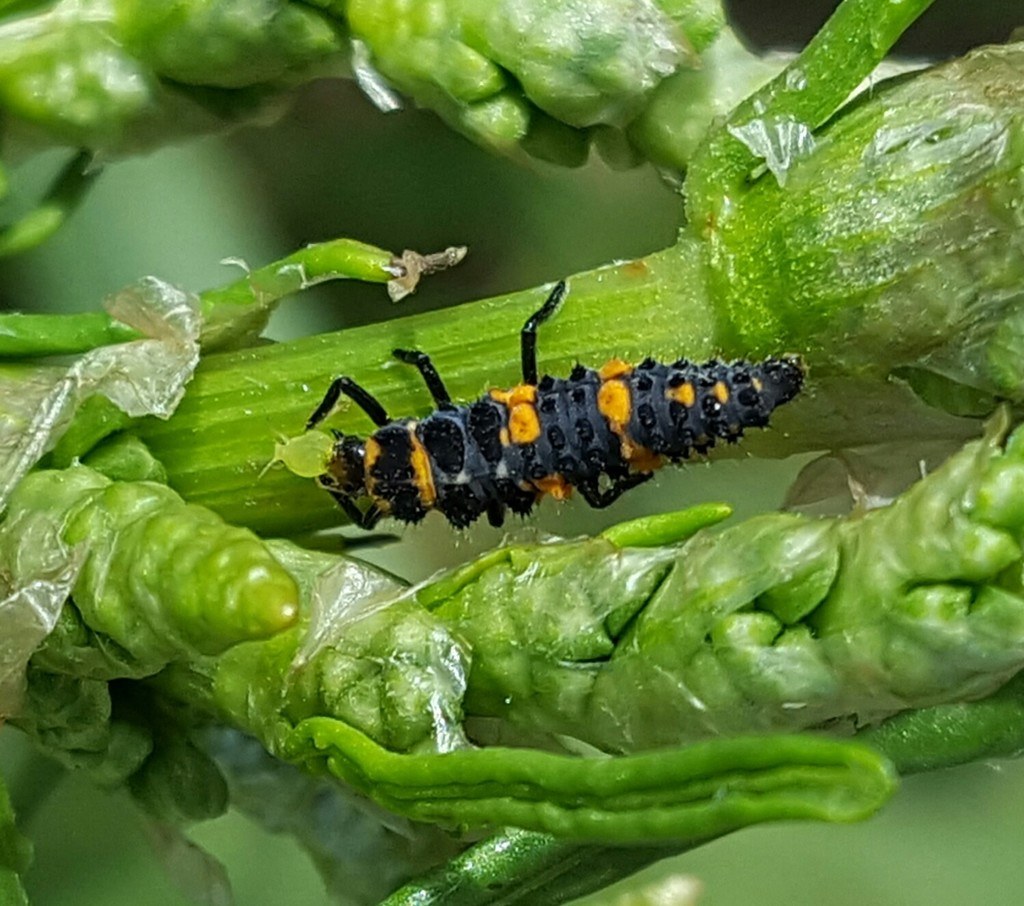
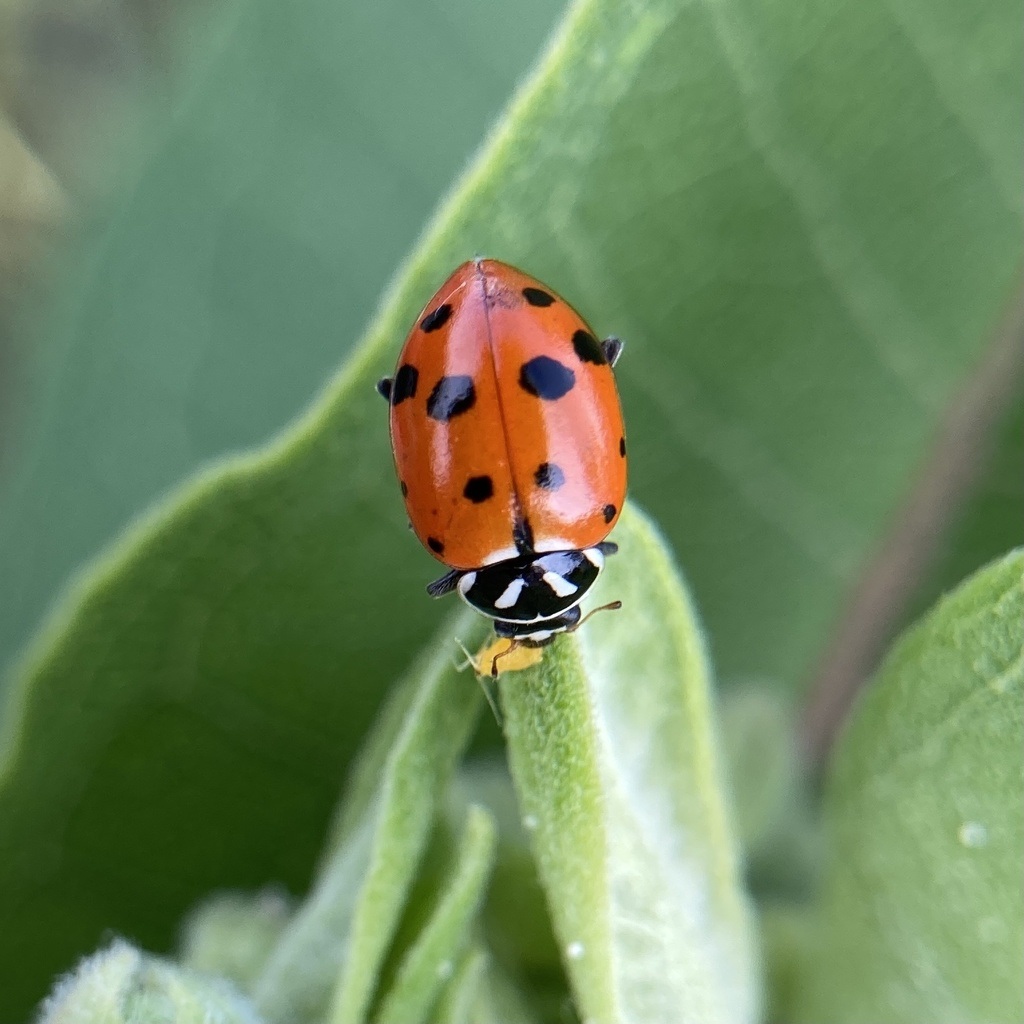
Like all insects, lady beetles begin their lives as an egg. Then, they hatch into a larva, which is often described as “alligator-like”. Larvae are dark, sometimes with orange or yellow markings. They feed on soft-bodied pests, including aphids, mites, scales, and moth or beetle eggs. After they pupate, they emerge as adults, some of which can live for more than a year. Adults are also predatory, eating much the same food as larvae. Some adults also eat pollen from flowers.
Lady beetle larva eating an aphid. Photo: Kimberlie Sasan
Adult lady beetle eating an aphid. Photo: Jody Green
Flower flies
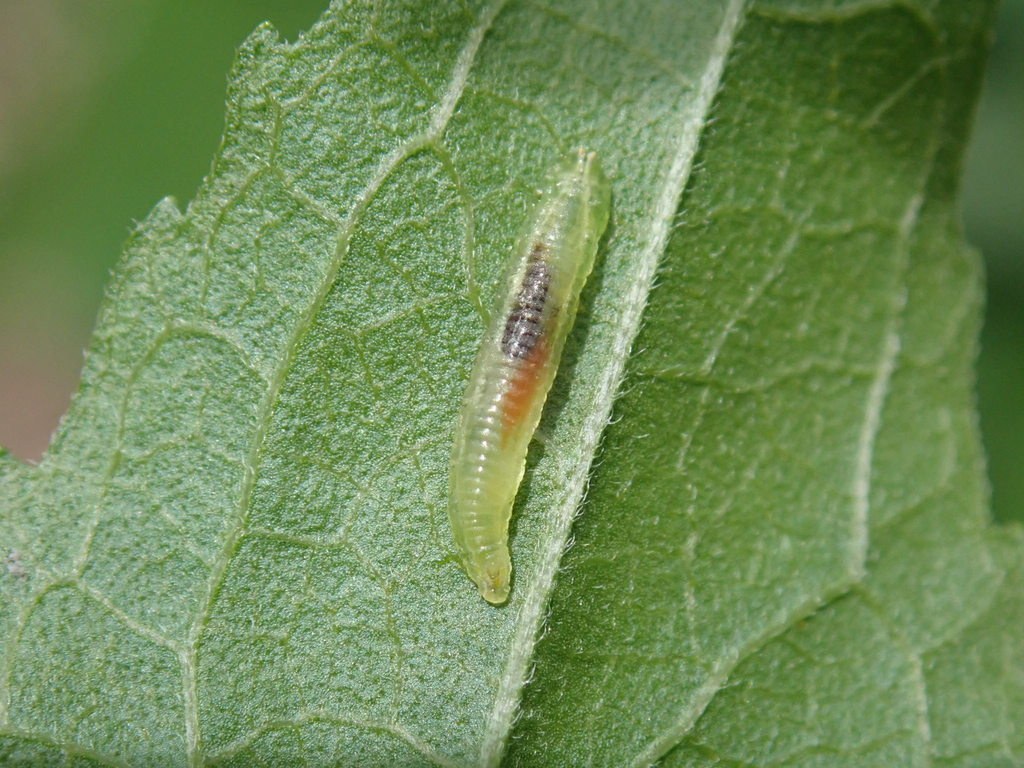
Flower flies, also called Syrphid flies, act as both pollinators and predators. Their larvae are predators of soft-bodied insects, including aphids, thrips, leafhoppers, and caterpillars. Different species have different prey preferences, but many species prefer aphids over other pests. The larvae have a caterpillar-like appearance, turning from green to brown as they age. Individual larvae can consume up to 400 aphids during their development, making them highly effective for aphid control.
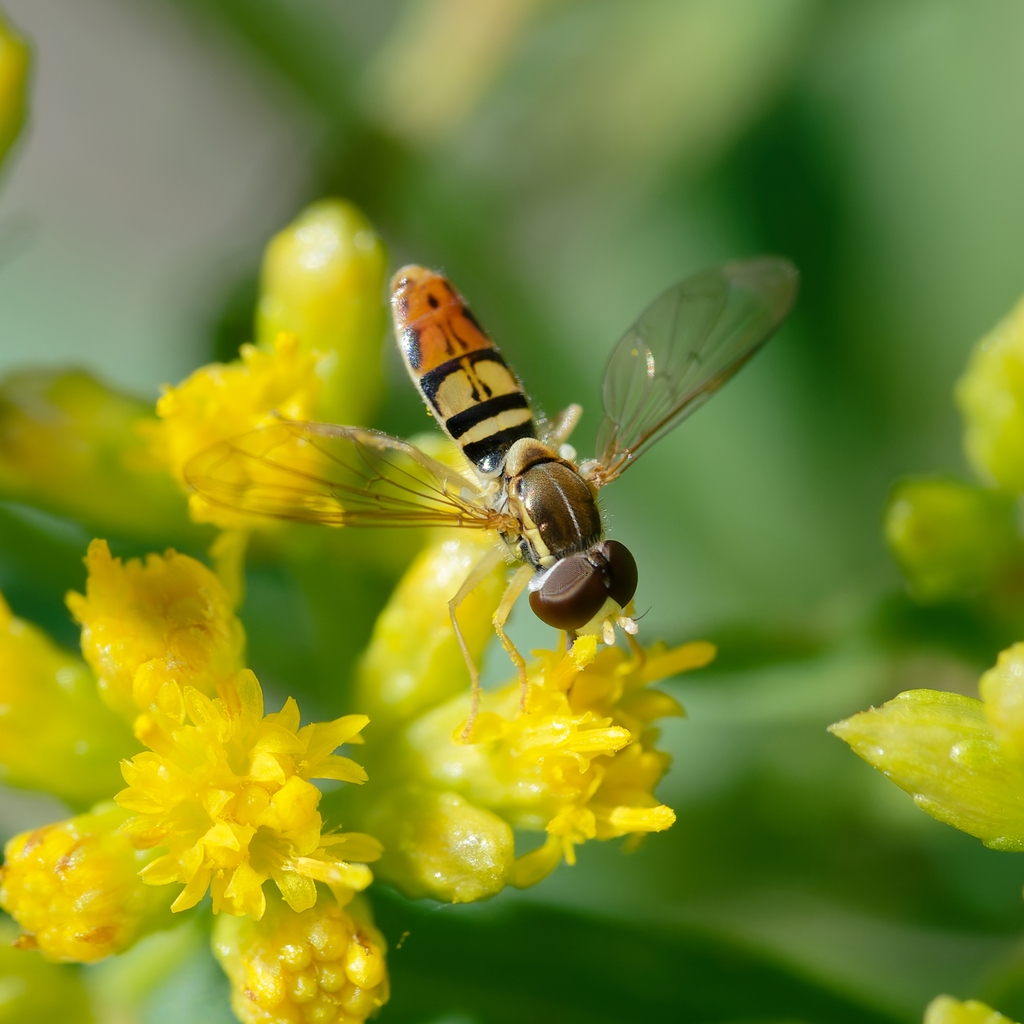
Adults are black and yellow-striped and often get confused with small bees. As adults, they visit flowers for pollen and nectar, providing important pollination services. One way to differentiate the adults from other pollinating insects like bees is to look at their eyes and antennae. Because they are flies, they have large eyes that almost meet at the top of their head and short, stubby antennae. They also have only one pair of wings, in comparison to the two pairs of wings found on bees.
Flower fly larvae. Photo: Matt Parr
Adult flower fly. Photo: Corey Farwell
Lacewings
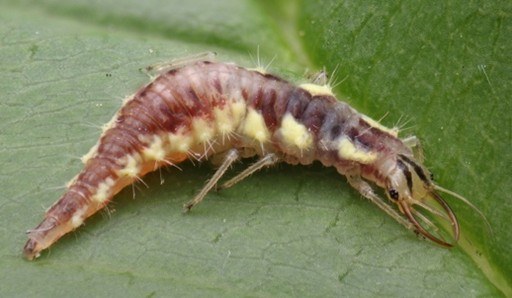
Lacewing larvae, sometimes called aphid lions, are voracious predators. Although they are known for consuming aphids, they target a variety of other pests, including mites, thrips, mealybugs, and various insect eggs. Larvae are gray or brown with an “alligator” shape similar to lady beetle larvae. They have large pincers that they use to grab onto prey and drink their body fluids.
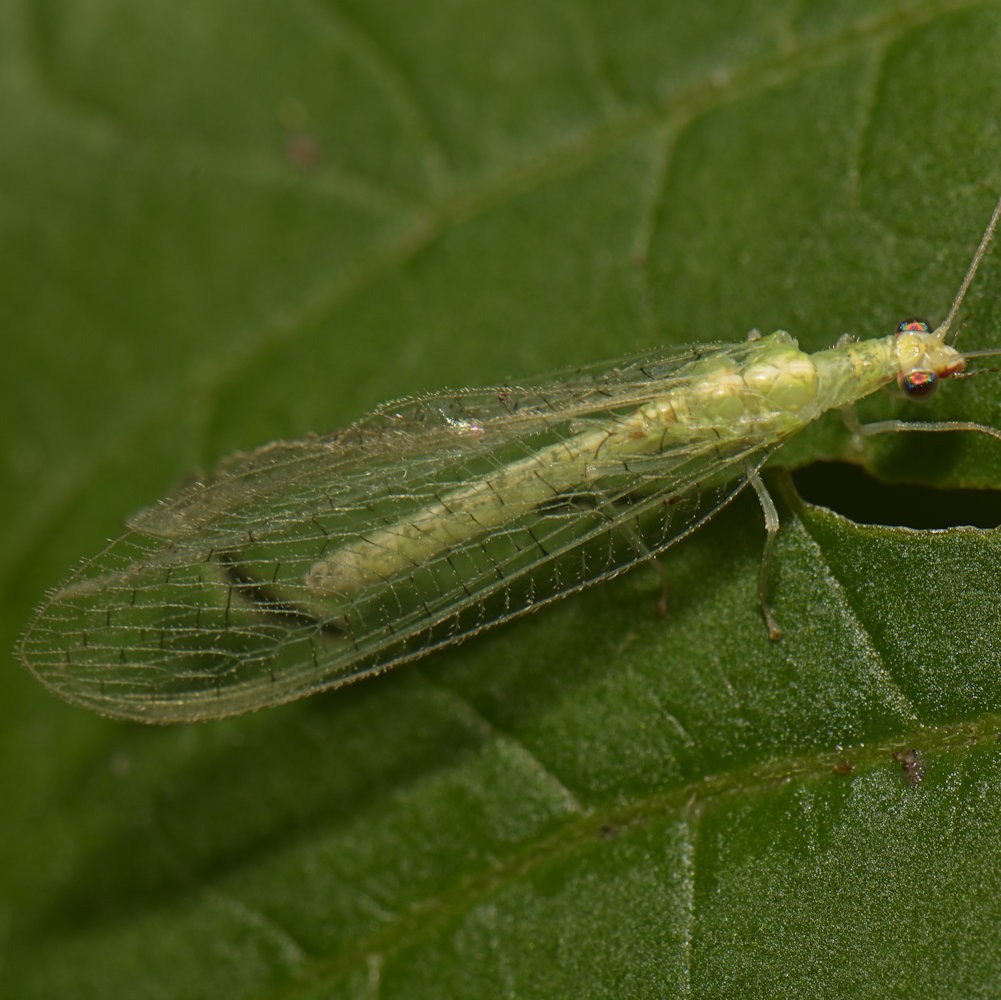
Adults are green or brown with large, intricately veined wings, a long, narrow body, and thread-like antennae. They prefer to feed on aphid honeydew and flower nectar. Adults are relatively short-lived- they complete their entire lifecycle from egg to death in as little as four weeks, meaning there can be multiple generations per year.
Green lacewing larva. Photo: Matthew Lindsey
Green lacewing adult. Photo: Reiner Jakubowski
Parasitoid wasps
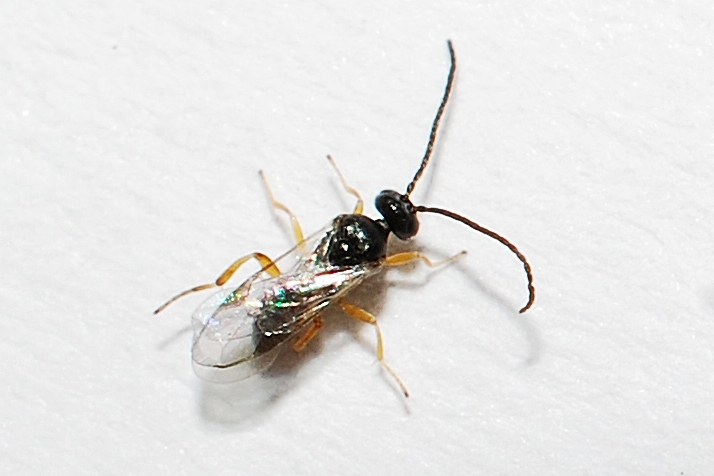
While lady beetles, flower flies, and lacewings hunt and kill other insects, parasitoid wasps are—like the name suggests—parasitic organisms that live in or on a host insect and kill them as they develop. These wasps are incredibly diverse, and scientists are far from discovering all the species that are out there. They are often tiny in size and can be hard to spot with the naked eye. Females lay their eggs in or on other insects, including many pest species. Individual parasitoid species typically have one preferred host species or group, but they can include caterpillars, weevils and other beetles, whiteflies, aphids, true bugs, and leaf miners.
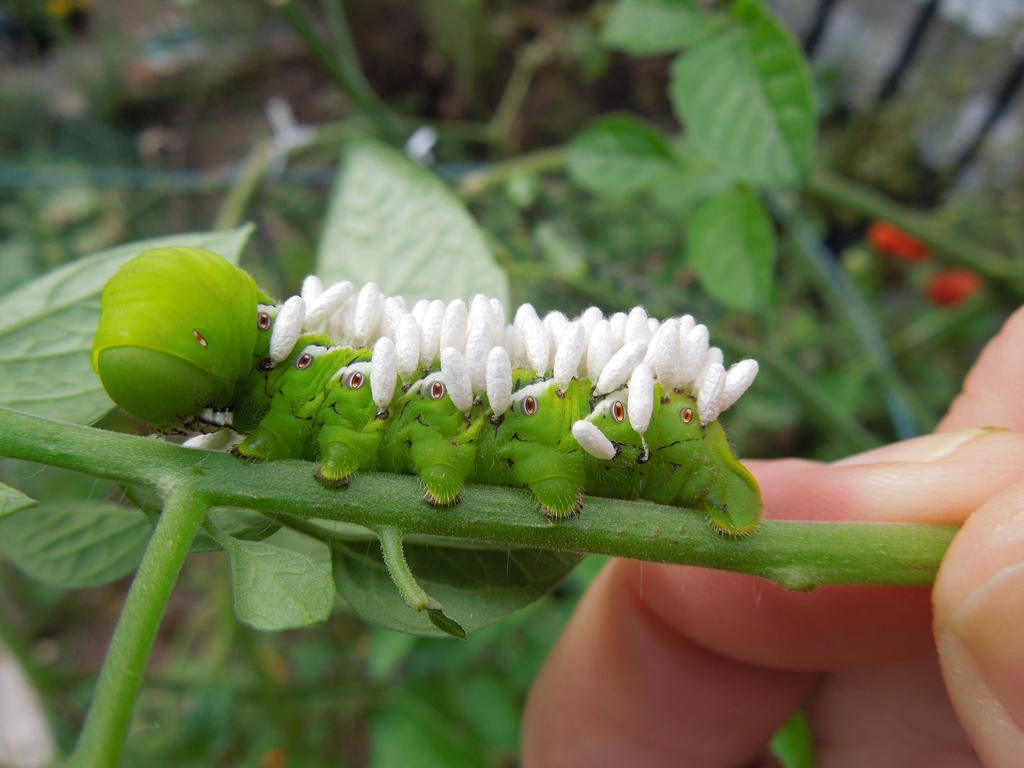
One commonly observed example of a parasitoid is the Braconid wasp, which lays its eggs in tomato hornworms. The larvae develop inside the caterpillar, feeding on its internal fluids and weakening it. When they are ready to pupate, the larvae emerge and form white sacs that hang off the back of the hornworm, giving it a distinct (and somewhat creepy) appearance. Soon after, the parasitoid adults emerge, and the hornworm becomes too weak to feed on tomato plants.
Tomato hornworm parasitized by a Bracanoid wasp. Photo: Dave Govoni
Adult Bracanoid wasp. Photo: Larry Clarfeld
Supporting natural enemies with pollinator habitat
Why talk about natural enemies on a blog devoted to pollinator-related topics? In agriculture, both pollinators and natural enemies provide important ecological services to crop production. Pollinator-friendly farm management practices can go a long way to protect natural enemies as well. Planting pollinator habitat with native plant species helps provide necessary resources for a variety of natural enemies. Many beneficial insects, including most of the ones described above, rely on native plants in at least one stage of their lives. Native plants provide shelter for adult insects and a pesticide-free area for them to lay eggs. Some species feed on nectar or pollen as adults. Having access to native flowering plants helps support robust natural enemy populations. Thus, pollinator habitat is a win-win for crop production; it can boost both pollination and pest control!
Resources and further reading
- Ecoregional Planting Guides – Regional guides for pollinator (and natural enemy) friendly native plant selection.
- Find Your Roots Tool – Build a personalized list of native plant recommendations for your habitat project.
- Flower Flies: Masters of Disguise 2-Pager – Learn more about this pollinator powerhouse
- Flower fly Identification Guide – Guide to identifying flower flies.
- Lady Beetle Identification Guide – Guide to identifying native and non-native lady beetles.
- Indiana Specialty Crop Fact Sheets – Quick reference sheets for common specialty crops in the Midwest, including information on the pests, pollinators, and other beneficial insects in different crop systems.
References
Anthony Shelton. Biological Control: A Guide to Natural Enemies in North America. https://biocontrol.entomology.cornell.edu/index.php