How I became an accidental plant parent and balcony gardener by Amber Barnes, Co-Director of Agricultural Programs, Pollinator Partnership
Published April 16, 2026
Let’s get one thing straight right away…I am not the best gardener, nor would I consider myself to be the most attentive plant caretaker. Whether they are indoor or outdoor plants, I grow them because they make me happy and serve important functions for the health of the planet and my family. That said, only the tough survive around here... When I go to a plant shop and see the words “thrives on neglect”, I snatch it up! Nothing else will do well in my care. This isn’t something that I’m proud of, I’m simply baring my shortcomings to explain that if I can tend a garden, I think anyone can!
Amber Barnes' thriving habitat garden.
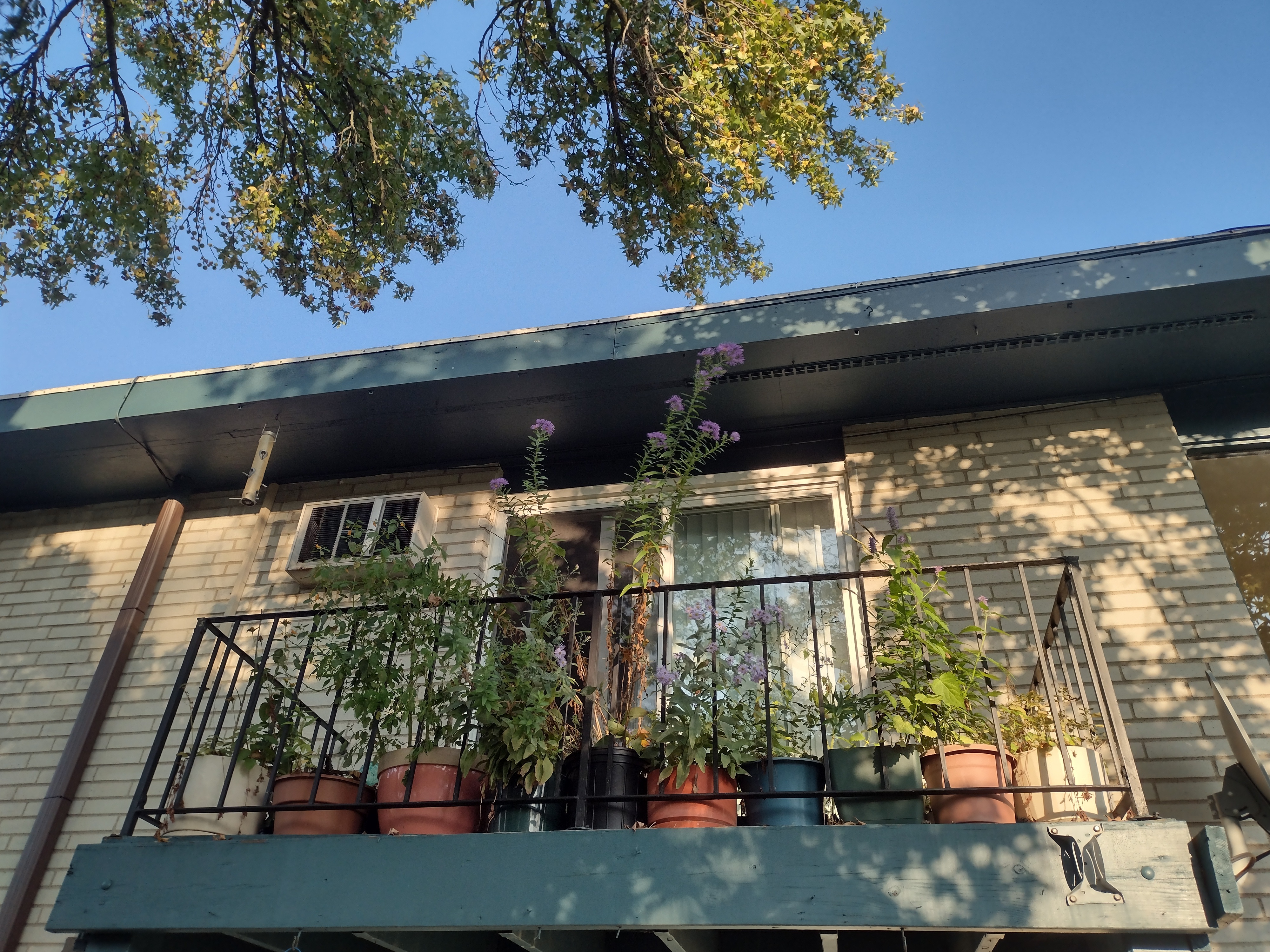
My plant journey likely started as many of yours did, with gifts. I was given houseplants as a newlywed when my husband and I moved into our first shared space, a two-bedroom, second floor apartment. It started innocently enough, with an orchid…then a spider plant…then a snake plant…then a Christmas cactus, and so on. Now, I have more than 15 plants scattered around my living room dutifully beautifying and improving the air quality inside the apartment, which I still reside in after all of these years.
As a second-floor tenant with no traditional garden space available to me, I thought I would be limited to only houseplants until I moved out, bought a house, and had land to call my own. The fact that I had only a balcony didn’t inspire me with much faith that I could create habitat. Early on, I tried to grow some vegetables without much luck. Not far from my balcony is a sweetgum tree (Liquidambar sp.) that partially shades my garden in the summer, making it a bad spot for growing tomatoes.
Amber's first balcony plants.
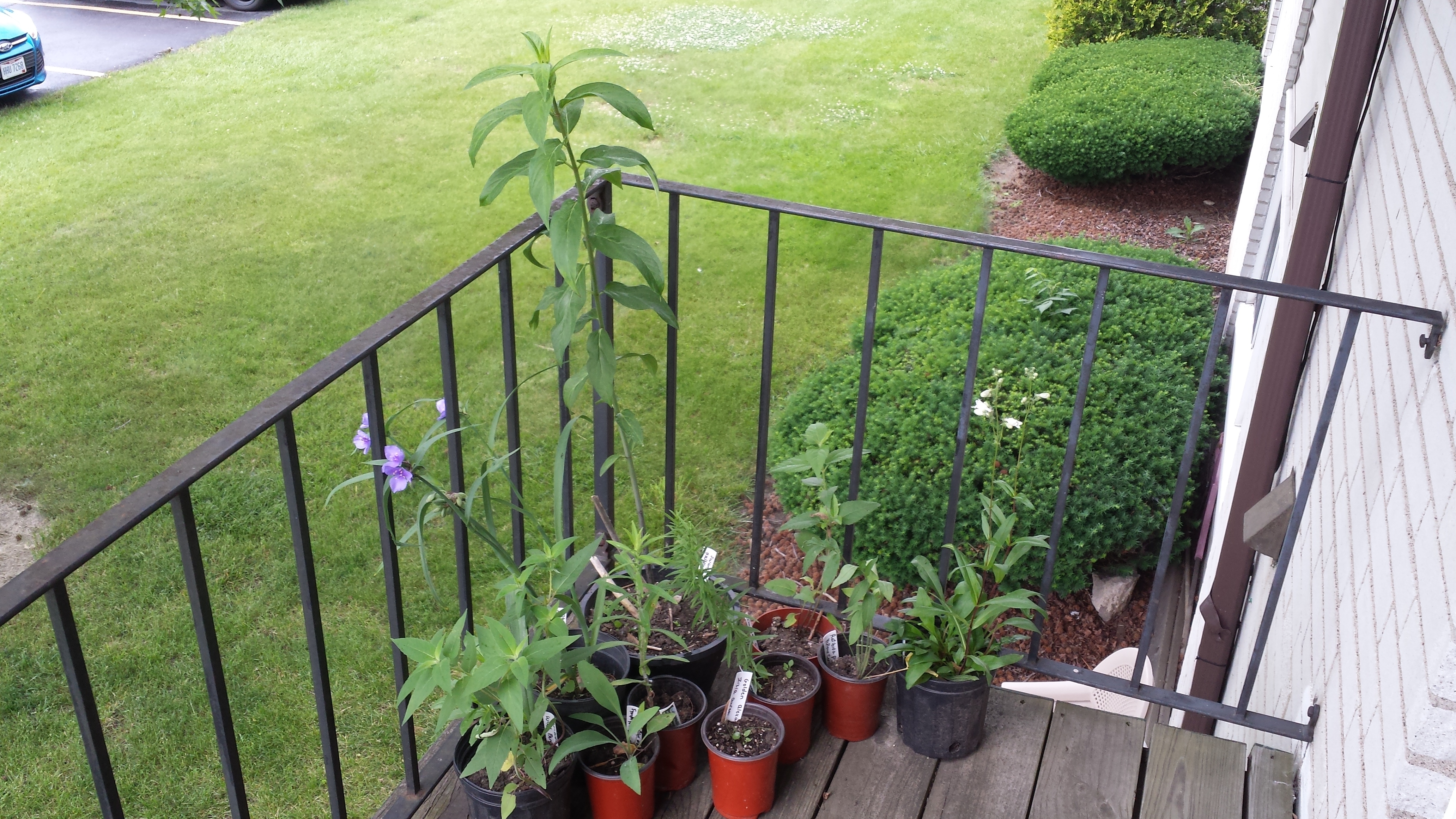
Things changed when I began working on a series of training events for our Monarch Wings Across the Eastern Broadleaf Forest project (the precursor to Project Wingspan). During these workshops, I was helping train volunteers how to identify native wildflowers. As a result, I sourced live examples of our target species to pass around the classroom and give people hands-on experience assessing the various key identification characteristics of each plant. Between workshops, I had to keep these plants alive, so I put them on my balcony, watered them, and hoped for the best.
To my delight, I found out that native wildflowers are surprisingly resilient when faced with less-than-ideal conditions. Years after I had concluded the workshops, many of those plants lived on! Most were able to successfully overwinter outside in pots and those that didn’t have been replaced over time. These days, there’s barely room to walk on my balcony thanks to the MANY pots that reside in this unlikely garden space. At times, I’ve had around 25 different species of Ohio native wildflowers in my little balcony garden. Some have stuck it out for nearly 10 years, while others have only lasted a season or two. Regardless, I’ve been able to provide year-round habitat to my wild neighbors, which they have definitely appreciated.
Some of the lessons and tricks that I’ve learned:
Build it and they will come
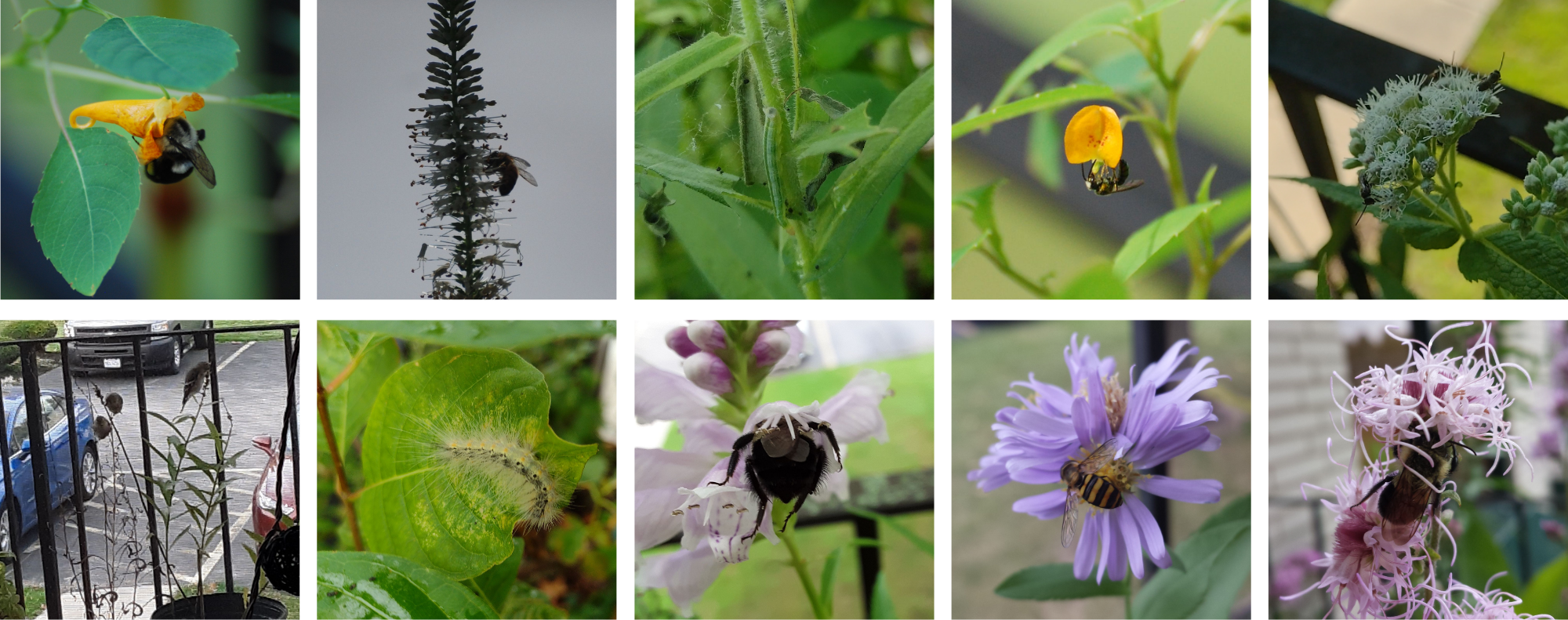
While my pot-bound perennial wildflowers may not be “living their best life”, they support many types of wildlife! I get an assortment of pollinators who visit my plants when they’re flowering, birds who eat the seeds when they’re not, and have a remarkably diverse ecosystem, considering it’s a balcony! I have witnessed hummingbirds getting a sip of nectar, parasitoid wasps controlling an aphid outbreak, caterpillars munching on leaves, and bumble bees taking naps in my flowers.
Wildlife seen in the balcony garden.
Tips for overwintering on the balcony
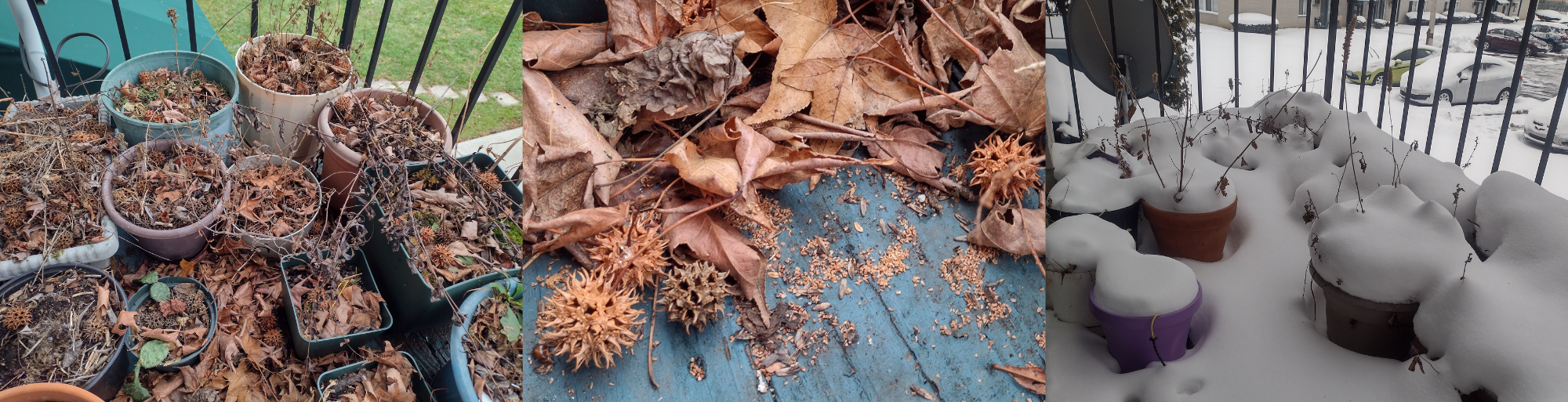
Leaving the leaves isn’t just for lawns and flower beds! My beloved sweetgum drops leaves (and spiky seed balls) every fall. I let them collect on my balcony and stick the leaves between the pots as insulation as I annually cluster the plants tightly together to help them get through the cold and windy winter. This also creates a safe home for lots of other critters that overwinter in plant debris. I was amazed at all the life that was sheltering in my balcony leaf litter when I cleaned it up late spring of last year. Since it’s a wooden balcony, I can’t leave the leaves indefinitely, but that winter cover seems to really make a difference for the flora and fauna that call this little space home.
Leaf litter insulation and refuge.
Once I see what has survived the winter, I visit native plant sales to fill any empty pots. Most sales around my area take place in May, around Mother’s Day, which is perfect since by then the threat of frost is gone, and I know what’s starting to resprout.
During spring cleanup, I’ve experimented with just putting the leaves, sticks, and other plant material from my balcony floor into empty pots so that I can continue to provide shelter during the rest of the year. The birds seem to like scouring my various pots for a snack, so I think it’s working!
Using Compost
I’ve also experimented with adding kitchen scraps, compost, and compost tea to help ensure the soil remains full of life and nutrients to help the plants grow. I haven’t found a great system yet, but it does seem to help! I also repot as needed to ensure the plants have enough space as they mature and get a soil refresh.
Watering and Drainage Woes
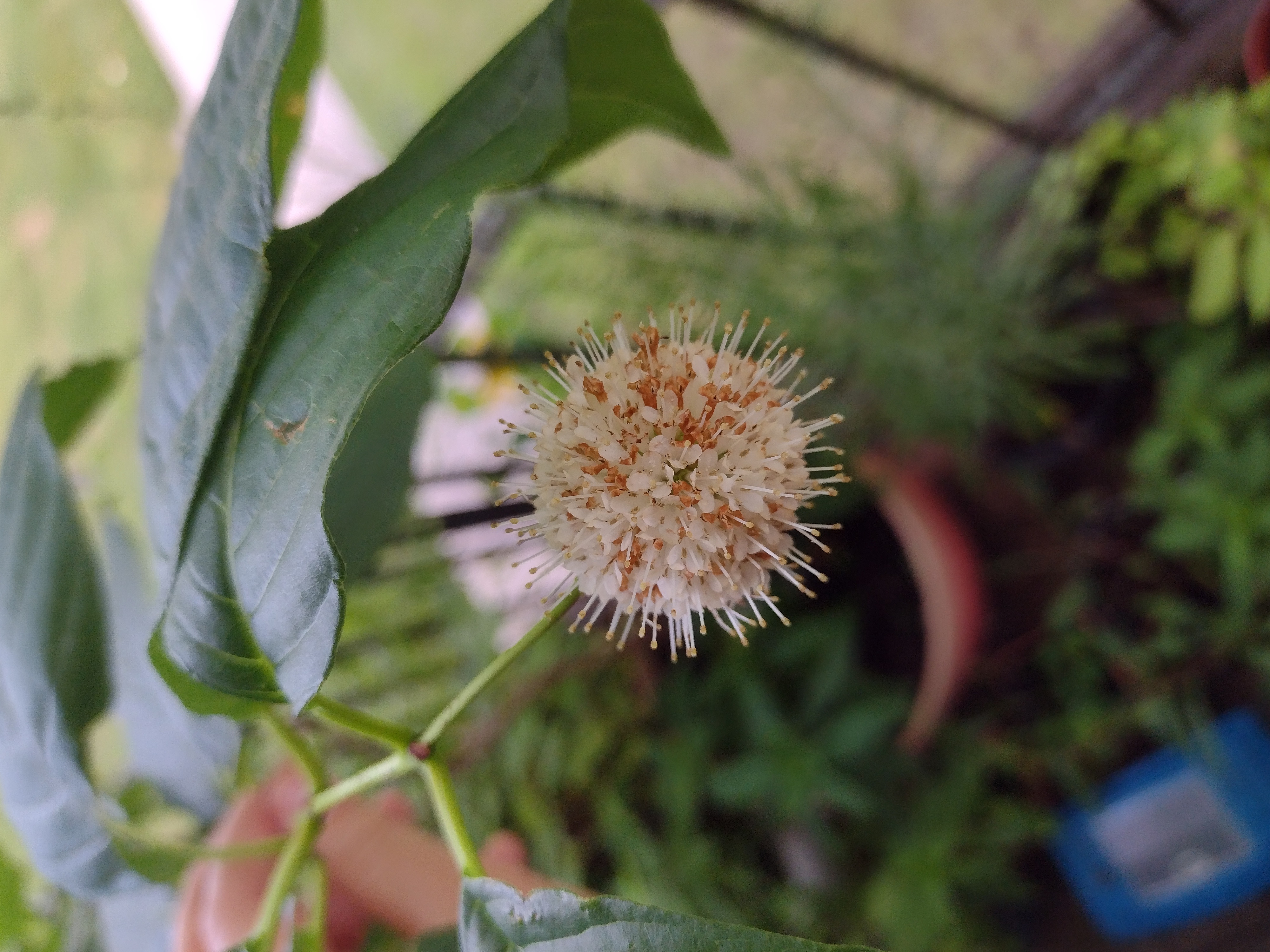
It’s possible to keep both wetland and upland species in pots; the wetland plants just need to be watered more frequently than the others. So far, I’ve had decent success caring for both. Somehow, I’ve even managed to kept a buttonbush (wetland obligate shrub) alive on my balcony for ~8 years.
Buttonbrush (Cephalanthus occidentalis).
In addition to factors like the outdoor temperature and rainfall, the color, material, drainage, location, and size of the pot will impact how frequently you need to water. Having a water reservoir at the bottom can be very helpful in the summer, but can result in oversaturated soils and rotten plants if you don’t drain excess water during the colder months. I’ve lost a few plants that way. Taking the reservoir off for the winter can help, but I’ve found that they’re sometimes difficult to reattach later.
Plants that prefer to stay drier are better to have on the periphery and in sunnier locations, since they will dry out more quickly. I keep those that like wetter roots toward the interior and/or shadier parts of my balcony.
I still get some unwanted plants (or weeds) that pop up in my pots, and they do require some tending, but it’s not very time consuming. I just try to make sure I get to it before they set seed.
Luckily, my neighbors, including my downstairs neighbor, love my balcony garden. They appreciate the beauty it brings and got really excited when I told them about how it’s designed to support pollinators and other wildlife. That said, I have to be careful when I’m watering my plants! I always check below to make sure I don’t accidentally drench them or anything they may have left out on their patio that they wouldn’t want to get wet.
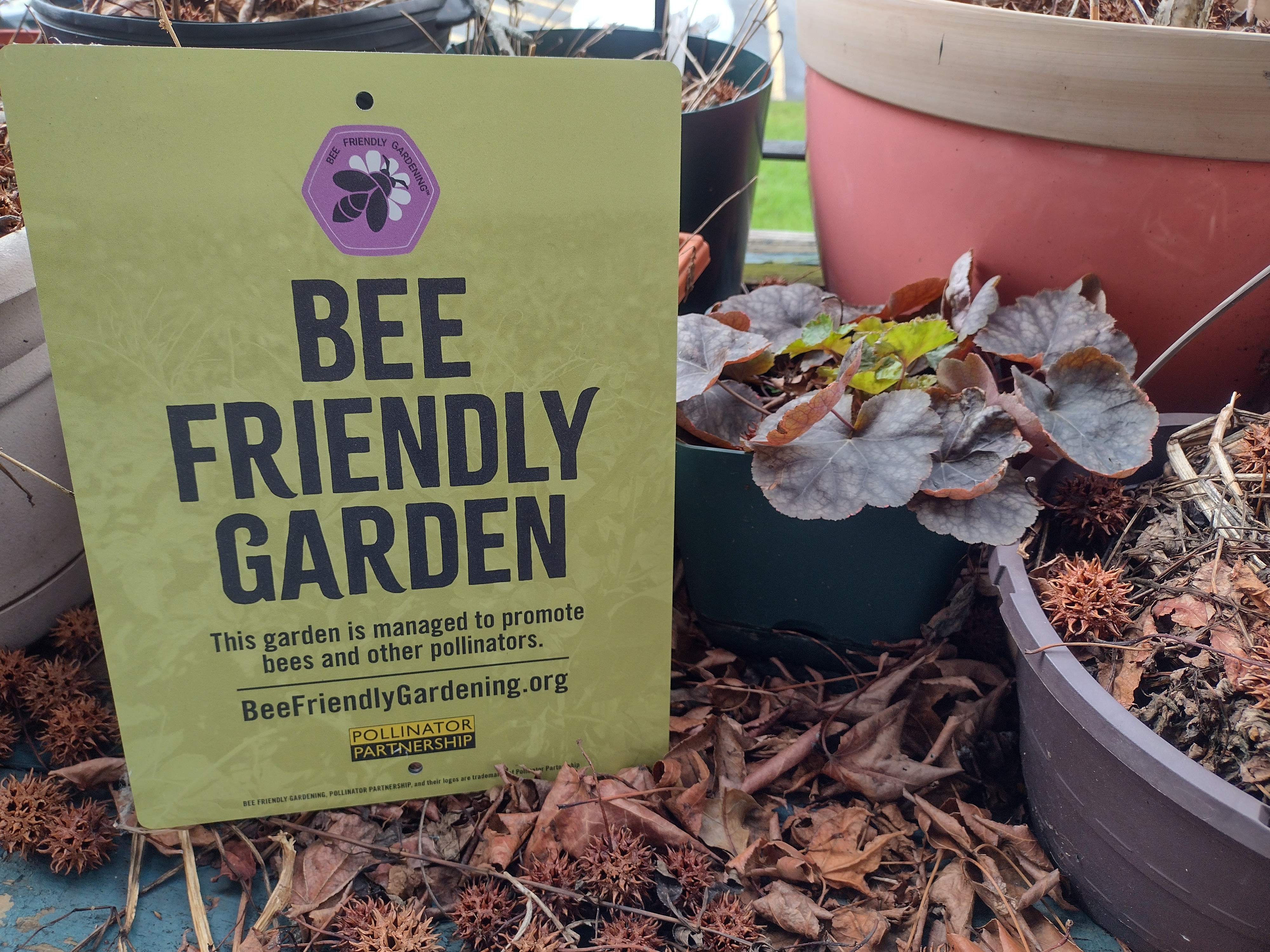
Bee Friendly Gardening sign.
Communication and interpretation are key!
Recently, the building manager changed, and the new manager put up signs saying that “empty pots” and “dead plants” must be removed from balconies over winter - noting that they were an eyesore and could potentially damage the structure. Luckily, they were receptive when I introduced myself and explained that my pots couldn’t come inside for the winter as they are perennial plants that are just dormant right now, not a bunch of empty pots. After I explained that my balcony was a wildlife garden that supports butterflies, hummingbirds, and other pollinators, and that I regularly rotate the pots to ensure they are not damaging the wood, they asked some questions, gave me the okay to keep my pots on the balcony, and told me they were excited to see the flowers next summer. I was so relieved!
Joining a program like Pollinator Partnership’s Bee Friendly Gardening (BFG) can also be helpful if you ever need to justify your garden to a skeptic. Through BFG you can purchase signage and learn how to talk about your garden with others, so that more people can appreciate not only what you’re doing to support pollinator conservation, but also what they can do to help!
More than two-thirds of land in the United States is privately owned and more than 85% of U.S. households have an outdoor living area. While it’s easy to believe that only people with substantial space and access to the actual ground can create meaningful habitat, my little balcony garden proves otherwise. Whether it’s one plant or a bunch, it does make a difference! I hope this article inspires you to experiment with whatever space you have available and see what you can do with it.
Large or small, pollinators need it all!
While I went into my balcony gardening journey blind, you don’t have to! There are lots of great resources out there that can support you in your own container planting journey. Though the basics remain pretty consistent, specifics may vary based on your local climate. Many University Extension programs have container gardening recommendations that are suited to their specific region. I suggest searching online using the key words “[your state] University Extension container gardening” or “[your state] master gardener container gardening”, see what pops up, and go from there.
"Never doubt that a small group of thoughtful, committed citizens can change the world; indeed, it's the only thing that ever has."- Margaret Mead