
Alberta Native Bee Council's Bumble Bee Box Monitoring Project
Food, spices, oils, and fibers – pollinators excel at making these items possible. The complexity of the pollinator world is astounding because of the roles they play and their vitality to healthy ecosystems. We celebrate these achievements through the incredible people and projects that are working to conserve pollinators. We hope these stories encourage and empower you to better understand who our pollinators are and what actions you can take to help them. This spring, we interviewed Ilan Domnich, Native Bee Stewardship Specialist, to shine light on a community-science powered bumble bee monitoring project. Read on for the preliminary results from this study. Learn where bumble bees are most likely to nest and find out how you can get involved with the Alberta Native Bee Council.
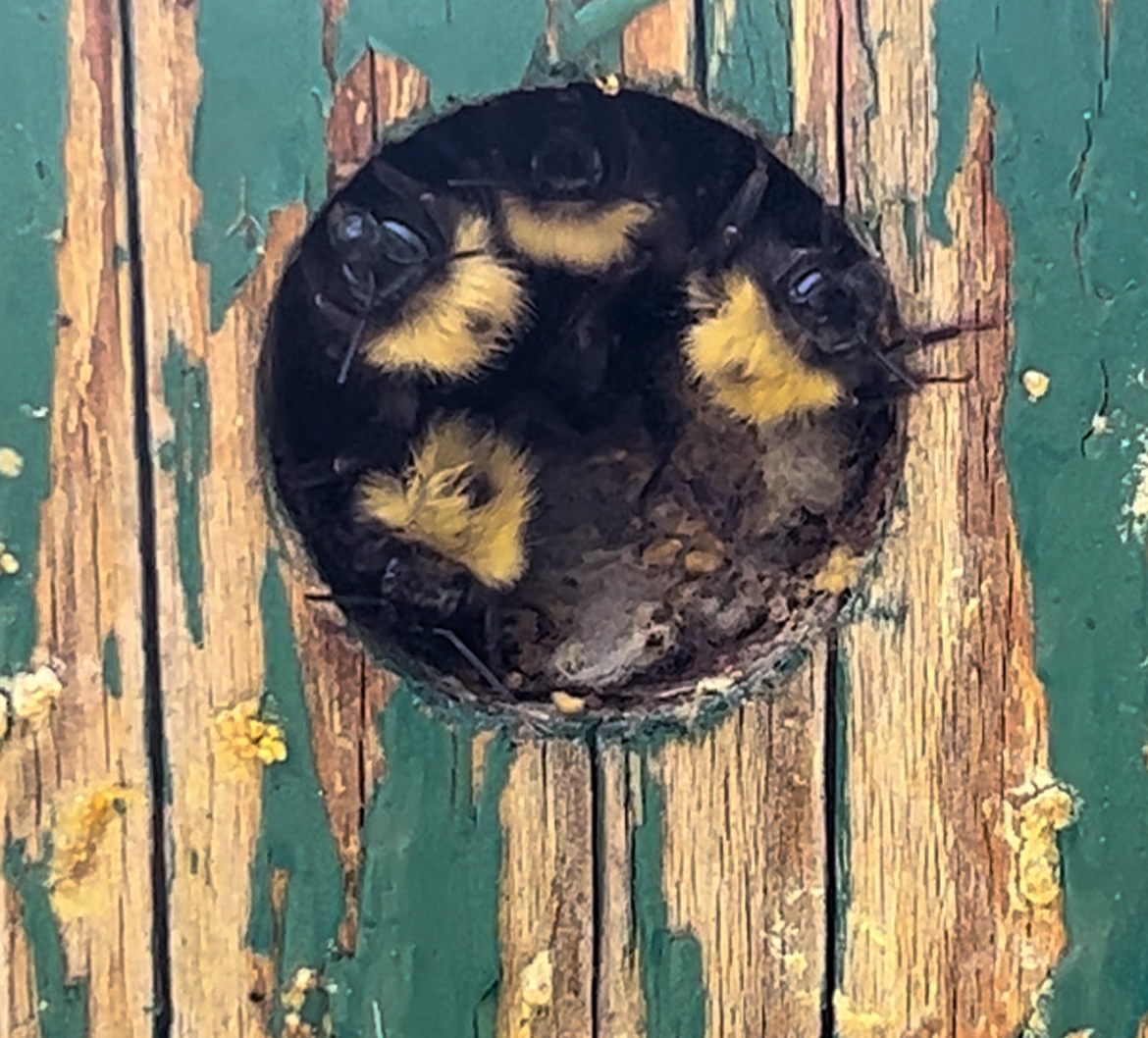
Bombus perplexus entering bee box. Photo: ANBC

1. How would you describe this effort (their research, project, outreach, advocacy, etc.) in 2-3 sentences?
The Alberta Native Bee Council runs a community science program focused on monitoring bumble bee box colonization across the province. By engaging the public to build, place, and report on these nesting boxes, the project gathers vital data on bumble bee habitat preferences and nesting success in both urban and rural environments, which over time has improved the box design and placement to increase occupancy rates. Simultaneously, it gives participants an interactive bumble bee nesting habitat that gives them a sneak peak into their hidden lives.
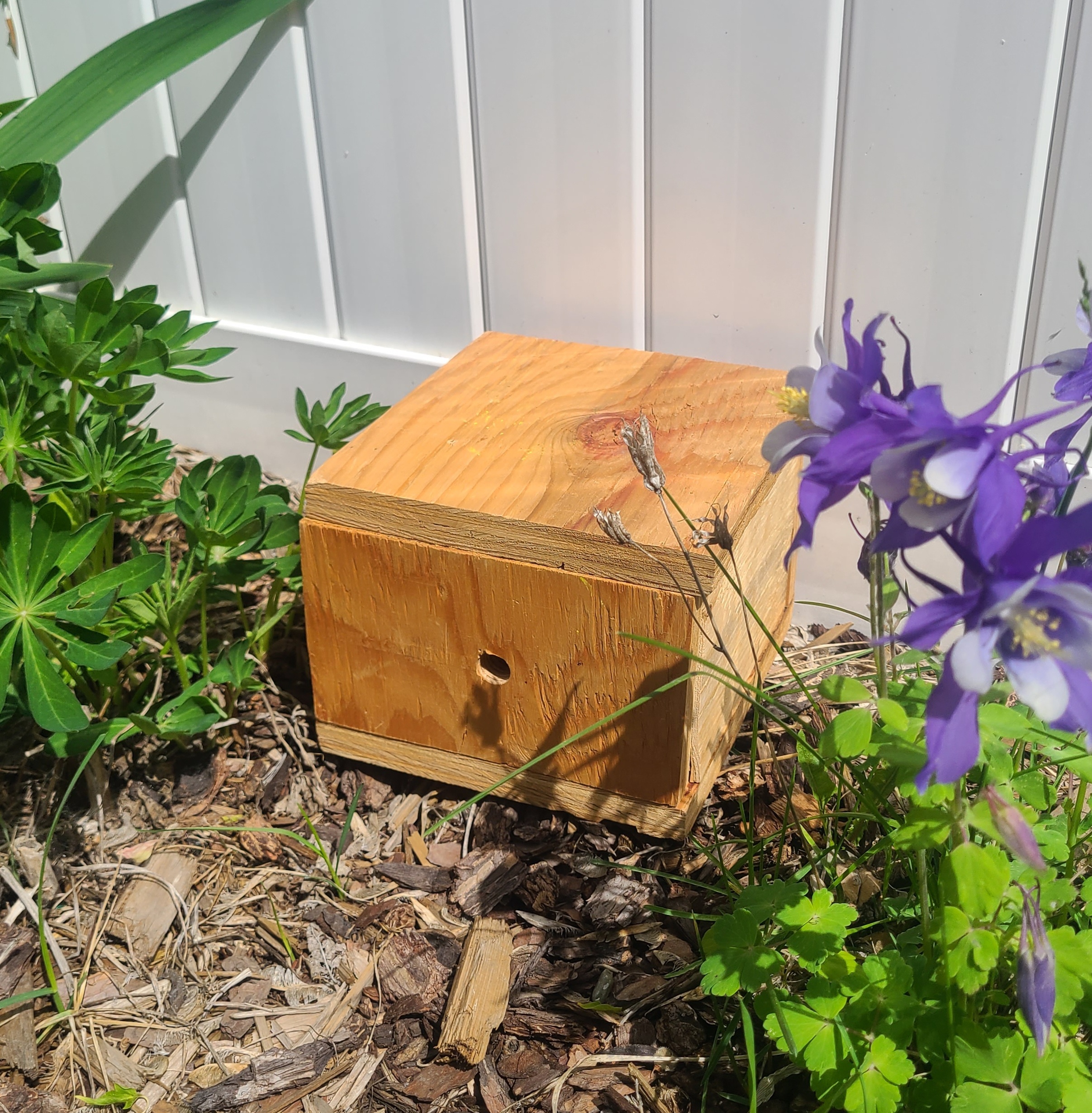
Bumble bee nest box on the ground. Photo: ANBC
2. How did your project/organization start?
The Alberta Native Bee Council (ANBC) is a nonprofit founded in 2017 to address the significant gaps in research, monitoring, and resources for native bees in the province, as well as widespread confusion between managed and wild pollinators. We officially launched the community science bumble bee box monitoring program in 2019 and have been running regular bee box building workshops to increase uptake and spread our message.
Bee box entrance. Photo: ANBC
3. What got you interested in or inspires you about pollinators?
Our inspiration stems from a drive to analyze bumble bee nesting preferences, which are poorly understood. While research has been done on some species, there is still more to learn about where Albertan bumble bees choose to settle. We are leveraging the power of community science to build on existing research and close those data gaps.
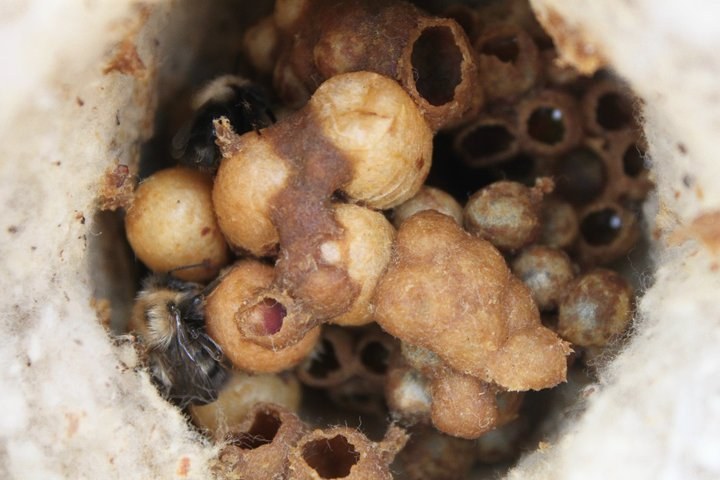
Beyond the data, we are inspired by the public’s enthusiasm for this work. It is easy to engage the community when they get a rare, "behind-the-scenes" look at the fascinating life cycle of a bumble bee colony. Participants get to engage with the complexity of the colony as they set up a nesting habitat to attract a new queen, witnessing the construction of intricate wax "honey pots" and brood cells. Providing people with this intimate connection to nature while allowing them to contribute to meaningful conservation is incredibly rewarding.
Bumble bee colony. Photo: ANBC
4. Which pollinators does your project/organization seek to help and what makes your efforts unique?
This project is dedicated to helping bumble bees, which are the only obligate colony-nesting bees native to Alberta. While bumble bees live in social groups with a queen and workers, solitary bees live and raise their young alone. Most of these solitary species nest in the ground, while others nest in dead wood or hollow stems, which is where the concept of "bee hotels" comes in. However, many bee hotels currently on the market do not follow best practices and may facilitate disease transmission and attract predators, posing risks to solitary bee health, but bumble bee boxes are easy to manage.
What makes our effort unique is that our bumble bee box program is firmly rooted in scientific research, in both design and purpose. By providing a specialized nesting environment based on actual data, we ensure that the design and maintenance of this manmade nesting habitat have no negative effects on the bees. Furthermore, we use the data collected from our community scientists to conduct ongoing research into bumble bee nesting preferences, helping us better understand the specific habitat requirements needed to support healthy populations.
Bumble bee nest box. Photo: ANBC
5. What successes have you achieved?
Our program has successfully established a growing, province-wide dataset spanning 2019 through 2026, a feat made possible by the consistent participation of our community scientists. Beyond data collection, we have achieved significant outreach success through a series of hands-on workshops that have engaged more than 1,000 people across Alberta in active pollinator conservation.
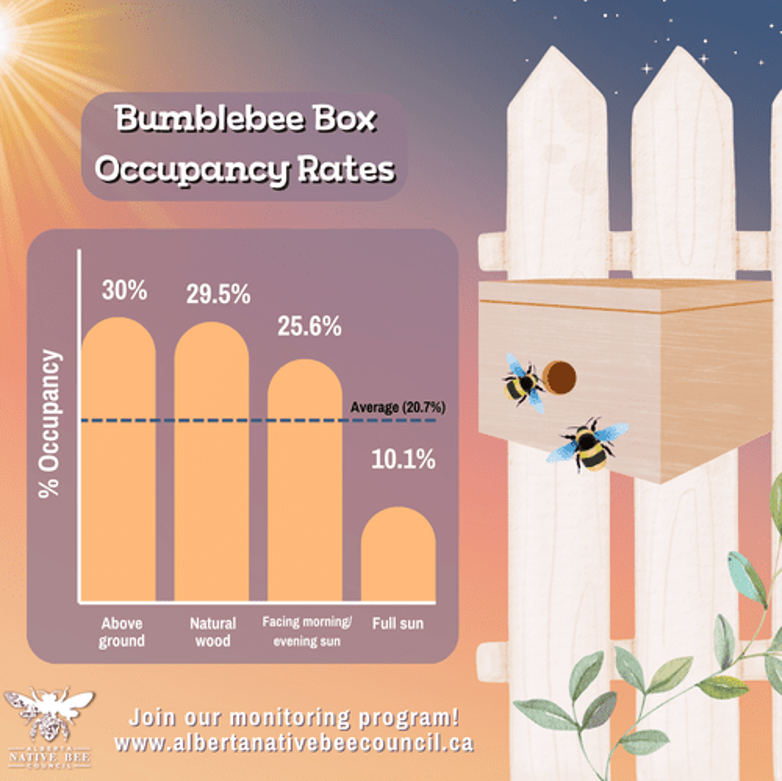
Preliminary findings indicate an approximate 25% colonization rate in urban areas, with slightly lower rates observed in rural settings. We’ve also gained valuable insights into placement: bumble bees show a preference for natural wood over painted surfaces, prefer to be slightly elevated from the ground, and gravitate toward "half-light" locations that offer morning or evening warmth. As our pool of respondents grows, we are excited to delve deeper into the many other environmental variables we track, moving toward better informed pollinator conservation.
Bee box occupancy rates. Photo: ANBC
6. What is your biggest challenge?
In our early stages, the ANBC relied entirely on volunteers, which made scaling our outreach and workshops a slow process. While transitioning to a staff-led model has allowed us to significantly increase our workshop capacity and community engagement, our primary hurdle now is ensuring consistent data reporting.
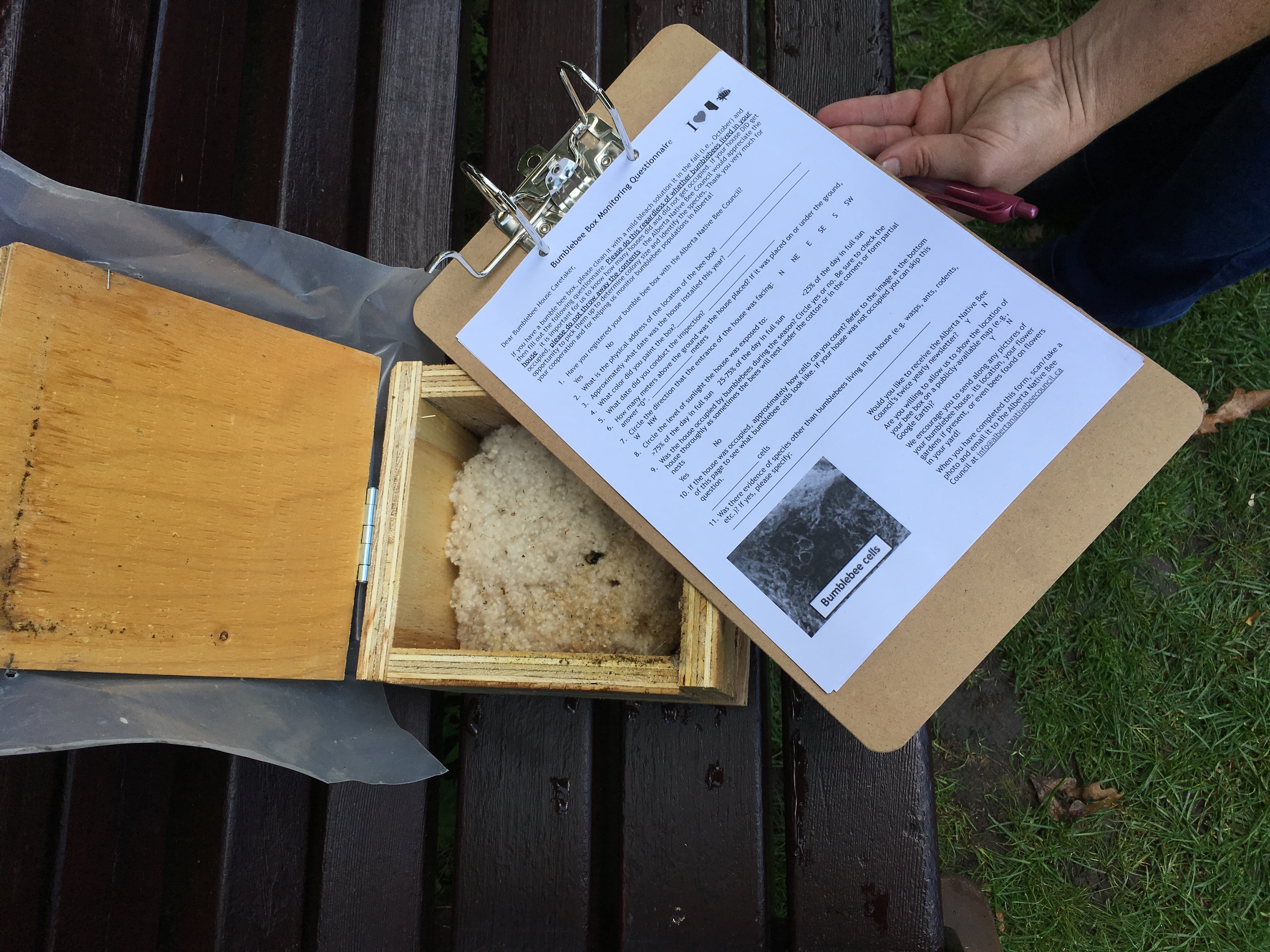
It is often difficult to convince participants that data on an empty box is just as valuable as a full one. We must continually emphasize that reporting "zero" occupancy is essential for scientific accuracy; without those reports, our data becomes biased toward only successful nests. Collecting these negative results is the only way we can truly understand the environmental factors that influence where bumble bees choose to thrive.
Bumble bee box workshop. Photo: ANBC

7. We’re always looking to improve our network of partners and promote good informational materials and projects that others can learn from. What are some of your favorite go-to references/resources for pollinator or habitat related questions?
Page for our Bumble Bee Box Monitoring Program–albertanativebeecouncil.ca/bumble-bee-box-monitoring
Bumble bee ID Guides– albertanativebeecouncil.ca/identifying-bees
Our Solitary Bee Habitat and Bee Hotels page–albertanativebeecouncil.ca/solitary-bee-habitat-and-bee-hotels
Our Native Plant Resource page–albertanativebeecouncil.ca/native-plant-resources
8. What is something about pollinator conservation or your project/organization you wish more people knew?
One of the most critical things we wish people understood is the significant difference between managed bees (like honey bees) and our native bees. While honey bees are livestock used for honey and crop pollination, it is our diverse native species that are under the greatest ecological threat and require conservation attention.
To truly support these native pollinators, a highly effective action anyone can take is planting native plants, which provide the specific food and habitat native bees evolved with. We also want to raise awareness about the dangers of systemic insecticides, such as neonicotinoids. These chemicals, often used as seed coats, permeate the entire plant and are frequently found in major crops often because untreated seed is often unavailable to farmers. Understanding these systemic threats and the importance of native flora is key to meaningful pollinator conservation.
9. Where can readers find more information about your project/organization?
Website– albertanativebeecouncil.ca
Instagram– instagram.com/albertanativebeecouncil.ca
Facebook– facebook.com/ABnativebees
10. What is the best way to get involved in your conservation work?
The most direct way to get involved is to build and monitor your own bumble bee box. You can download our research-based assembly instructions, place your box out by about May 1st, and join our Discord community to share photos and troubleshoot with other community scientists.
If you want to support our mission further, you can sign up for our newsletter and even become a member of the Alberta Native Bee Council to stay connected with our provincial efforts, or visit our online store to purchase merch. All proceeds go directly toward funding our research, monitoring, and outreach to support the conservation of Alberta's native pollinators.
Alone no individual or entity can address all pollinator conservation needs, but through collaborative conservation we can and will make a difference for pollinators and the ecosystems they help support. Keep following our Pollinator Conservation Spotlight series to hear more inspiring pollinator conservation stories. Do you know a great project or organization that is addressing critical pollinator conservation topics and deserve their moment under the spotlight? Let us know!
Article contributed by Maddie Dong, Pollinator Partnership, for the NAPPC Pollinator Communications Taskforce's Pollinator Conservation Spotlight Series.