Invasive Plant Species Management at Home, in the Forest, and on the Farm by Sophia Sorboro, Ohio Partner Biologist, Pollinator Partnership
Invasive species are all around us. As much as we don’t like to think about it, humans are responsible for the introduction and spread of many problematic species. Invasion methods and strategies vary – invasive species have been spread through transportation, have escaped human cultivation, and have even benefitted from changing climates.
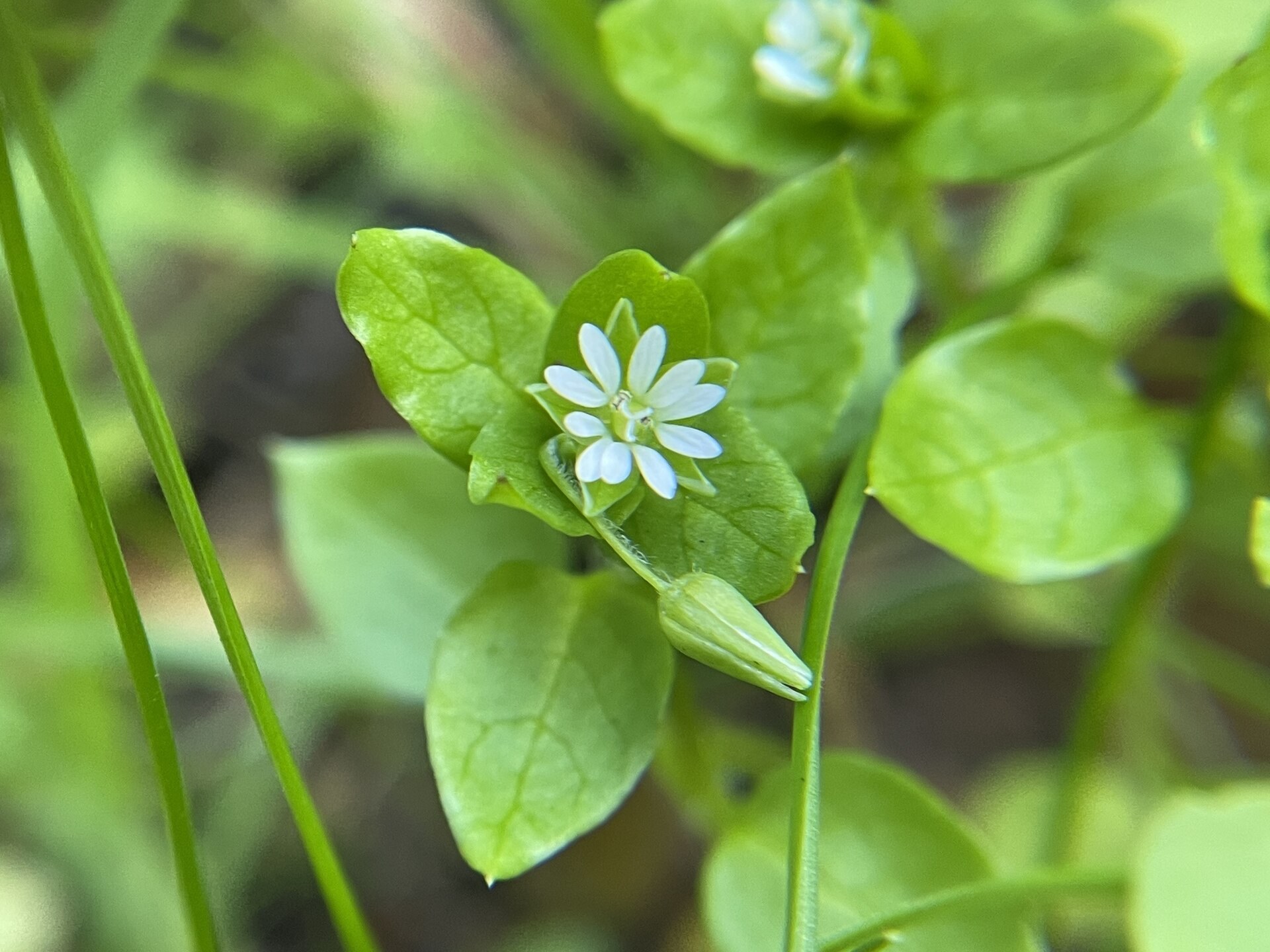
Common chickweed, Stalklaria media. Photo: Daniel Das, CC0
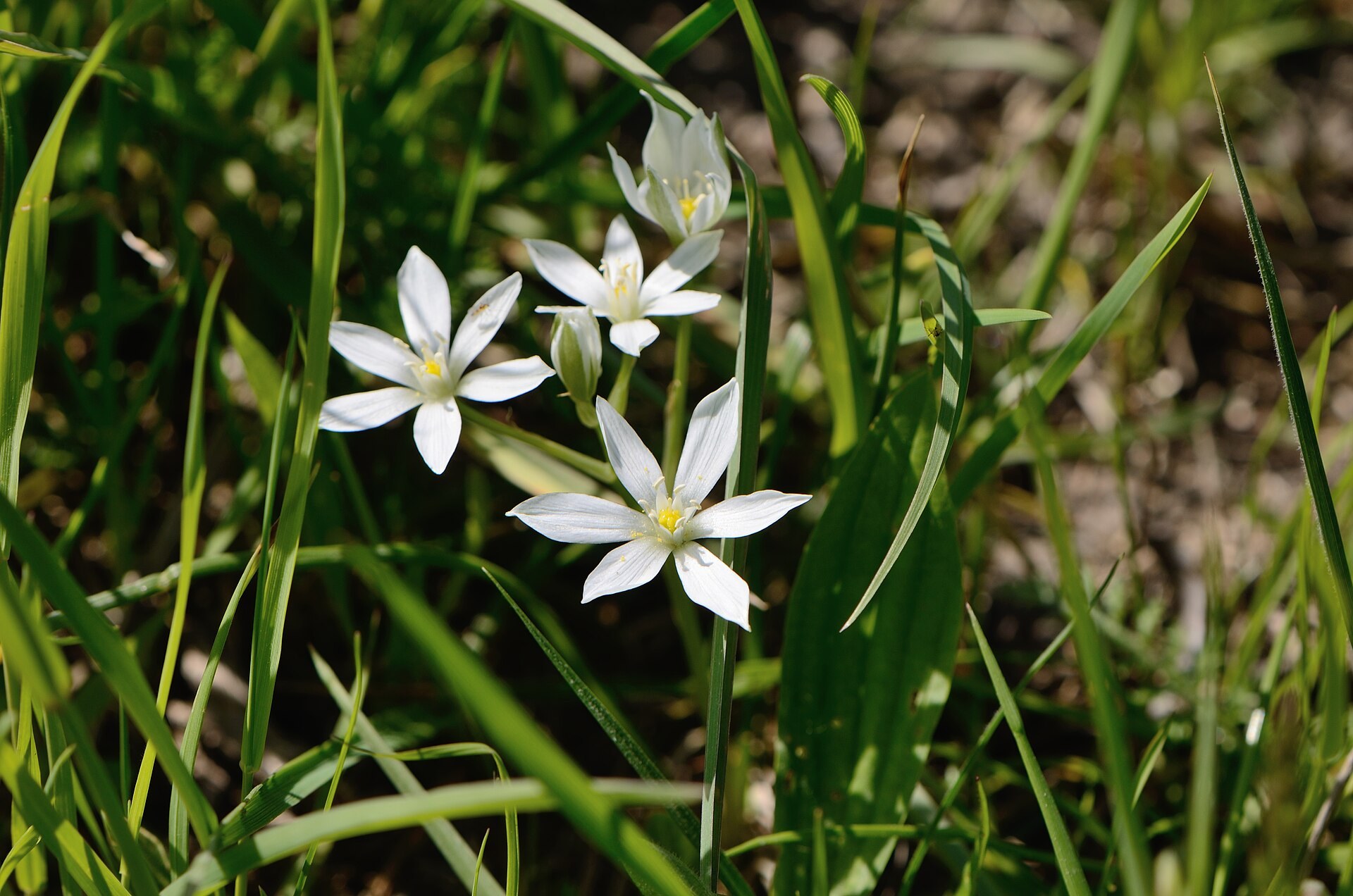
Star-of-Bethlehem, Ornithogalum umbellatum. Photo: Nicolas Weghaupt, CC0
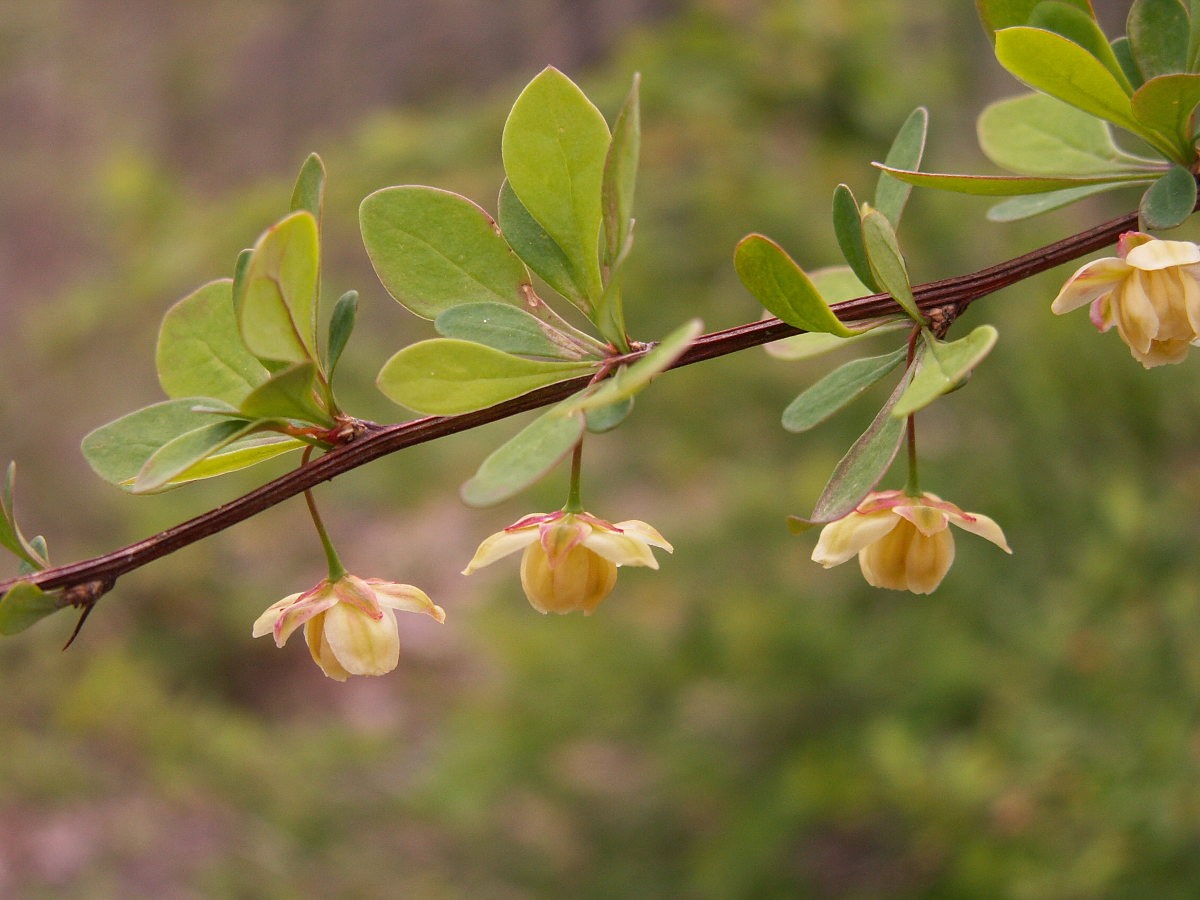
Japanese barberry, Berberis thunbergii. Photo: Cbaile19, CC0.
Defining Invasive and Native Species
Because there are all kinds of invasive species (plants, animals, fungi, etc.) and species come from and enter different areas, terminology can be very helpful in assessing and discussing a species. A native species refers to a plant, animal, etc. that evolved in conjunction with other species in a specific region or ecosystem over a long period of time, without any influences from human activity. In North America, native species refers to organisms that were present on the continent prior to colonization from European settlers. This distinction is important because Europeans introduced animal and plant species for agriculture and industry that were not present on the continent prior to their arrival.
In contrast to a native species, a non-native species is any species that evolved outside of the specific region or ecosystem being examined. The term non-native is broad and acts as an umbrella term for any organism found outside of its native range. An invasive species is defined by the United States Department of Agriculture (USDA) National Invasive Species Information Center as a plant, animal, or other organism that is non-native or alien to the ecosystem under consideration, and whose introduction causes or is likely to cause economic or environmental harm to human health or ecosystems. Invasive species are often able to survive and even thrive in a broad range of environmental conditions and lack natural enemies, which allows them to spread rapidly. They often grow and reproduce very quickly and out compete or push out species native to an area.
Assigning a geographic qualifier to a species is necessary when determining if it is native or invasive. A plant species can have a geographic range where it is native, and outside of its range it can be classified as invasive, act aggressively but not meet the definition of an invasive species or even naturalize in an area without behaving aggressively.
Are all Non-native Plants Invasive?
The short answer is no! There are several plants that have been introduced to areas outside of their native range. The majority of the food crops we grow in our gardens and on our farms are not native to North America. Many ornamental plants and cut flowers are also non-native in parts of, or all of, North America. These types of plants are referred to as non-native, non-native but non-invasive, or naturalized. While these plants can survive in various environmental conditions throughout North America, they also haven’t escaped human cultivation and grown in the wild. Unluckily for us, there are still plenty of invasive plants to worry about!
What Impact do Invasive Plants Have on Wildlife?
We know that pollinators have a special relationship with plants. Native bees require the right pollen to raise their young and suitable nesting habitat, including native stems. Some Lepidoptera species require host plants to develop– think of monarch caterpillars and milkweed! Studies have demonstrated that a higher diversity of flowers, especially native flowers, increases pollinator diversity overall and builds healthy, resilient populations.
We also know that different flower shapes support different pollinator tongue lengths, and different flower colors attract different species of pollinators. This is especially true for specialist pollinators that rely on one plant, or a handful of plants, for the entirety of their forage.
When invasive plant species dominate the landscape, we see a huge reduction in native and diverse forage overall. With less blooming species and reduced nutrition in the forage that is available to our pollinators, we know that invasive plant species have a direct and negative impact on pollinators, as well as other wildlife like birds and small mammals.
What Can I Do to Fight Invasive Plant Species?
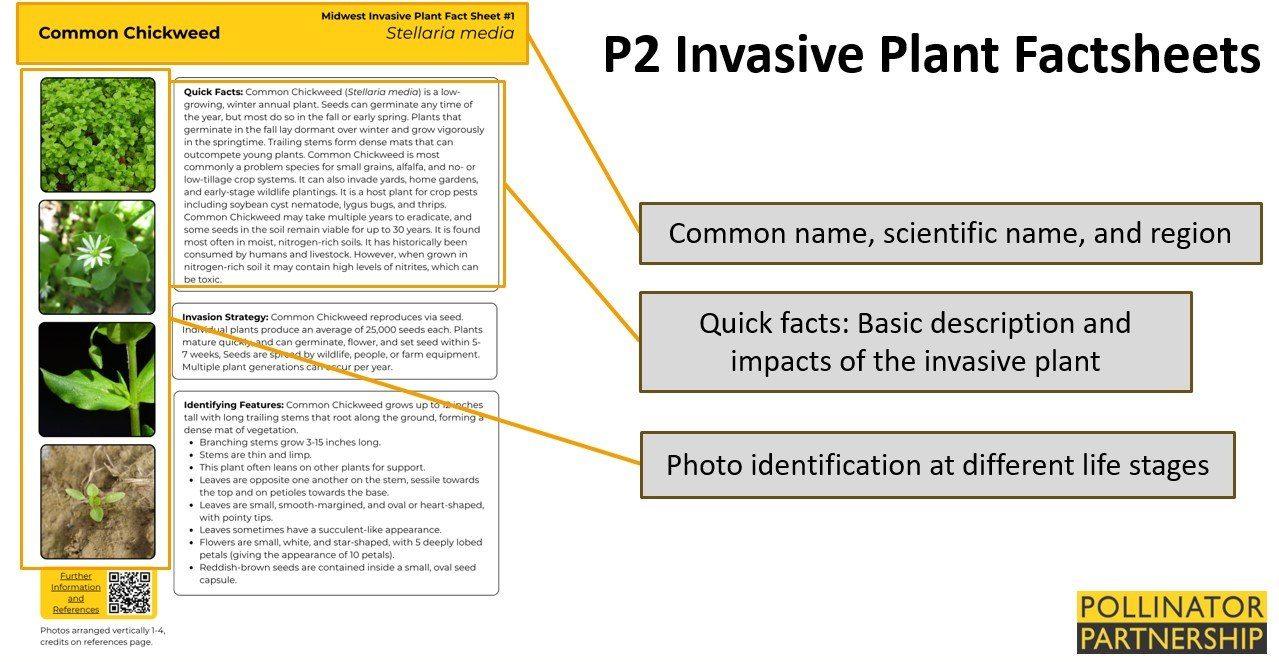
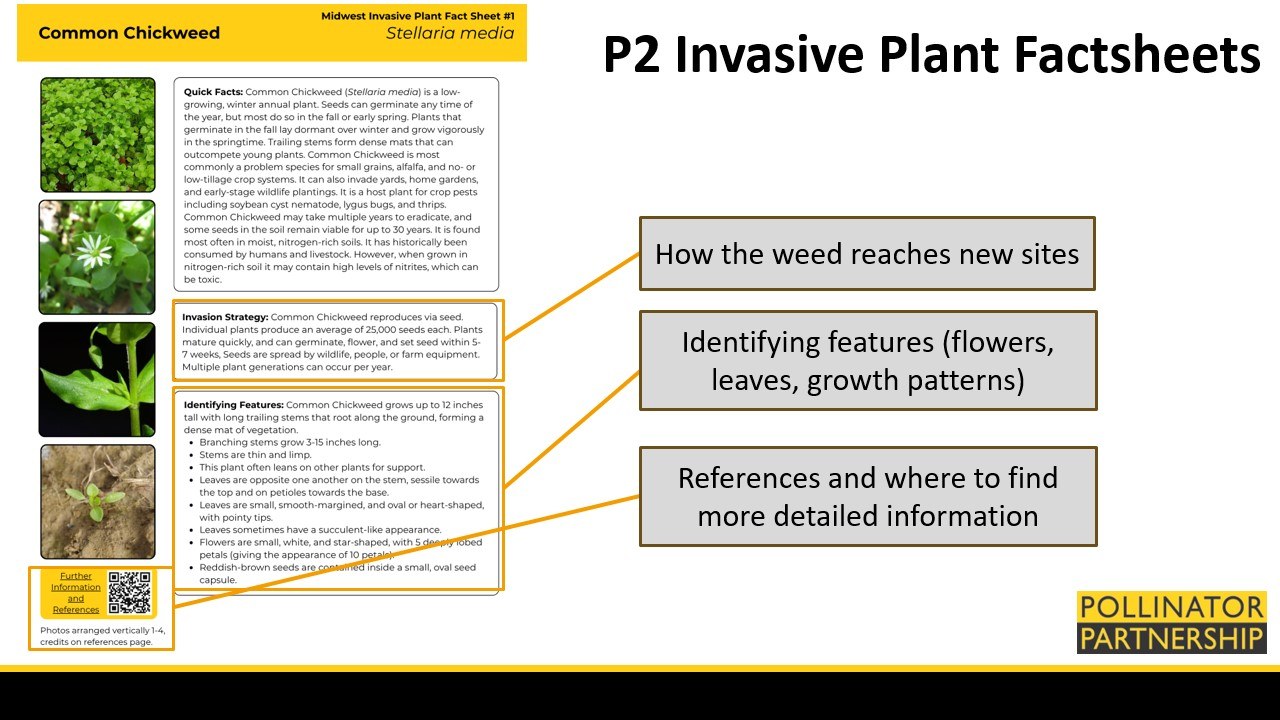
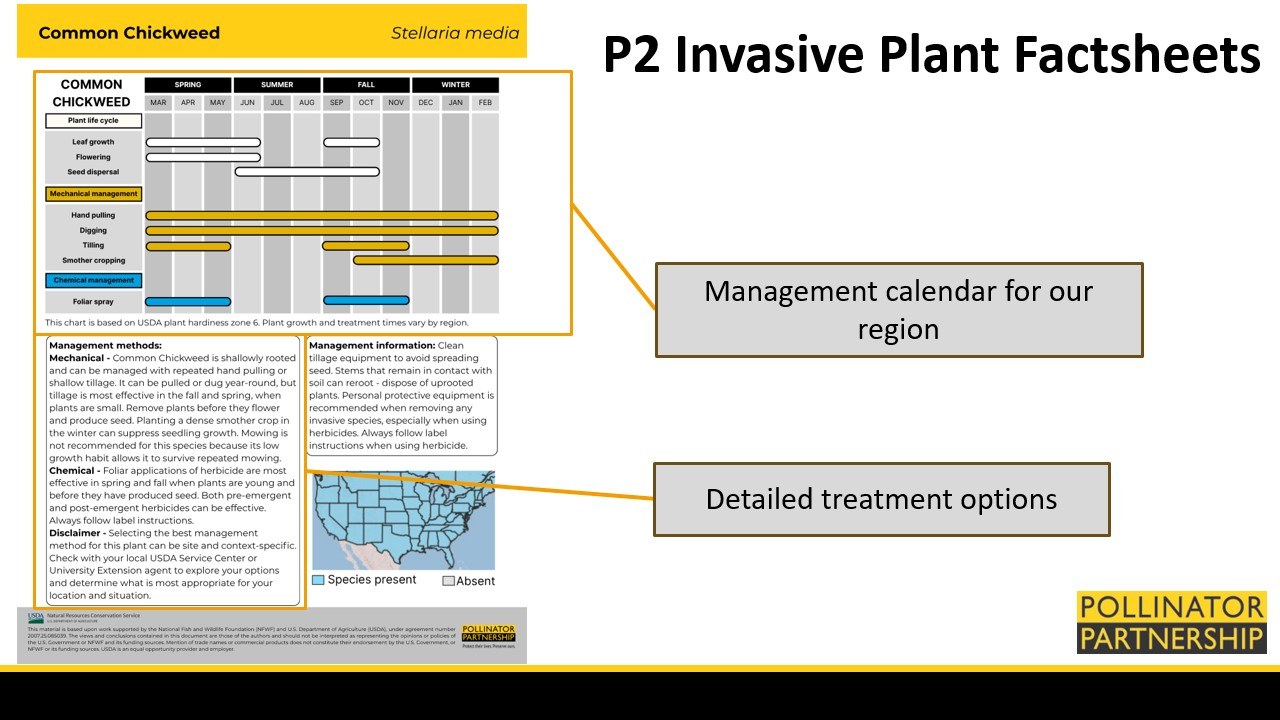
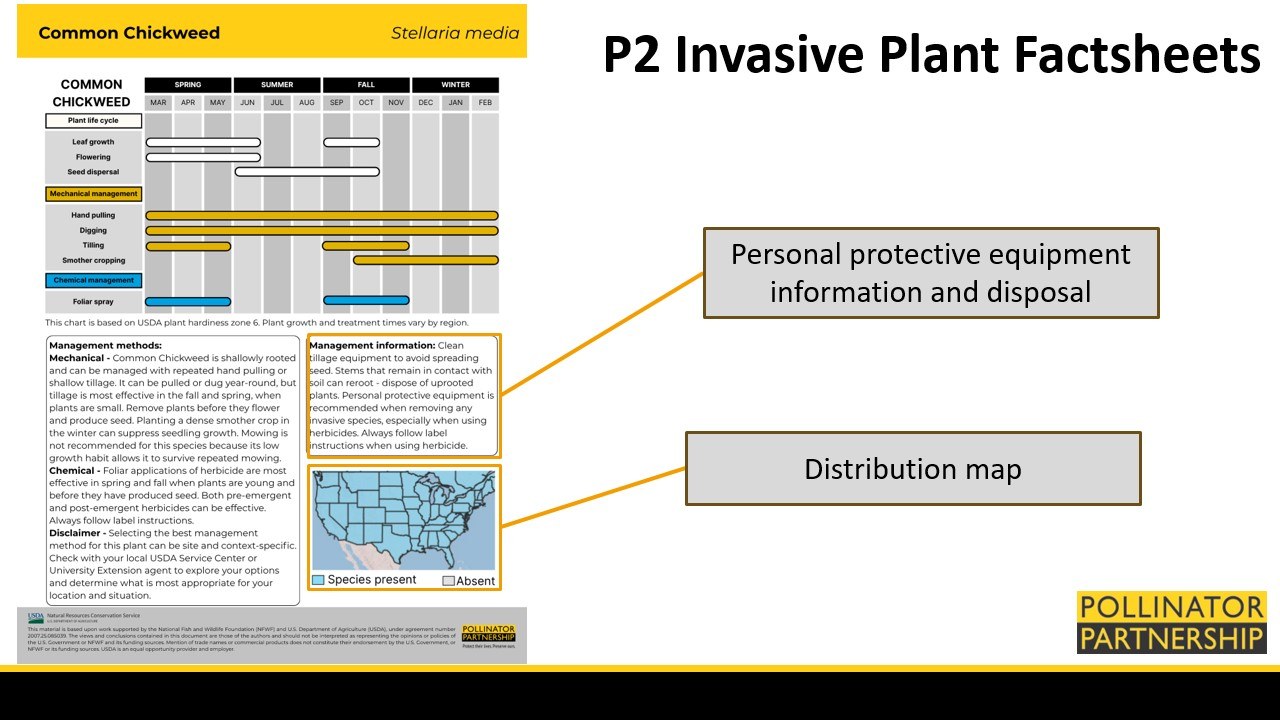
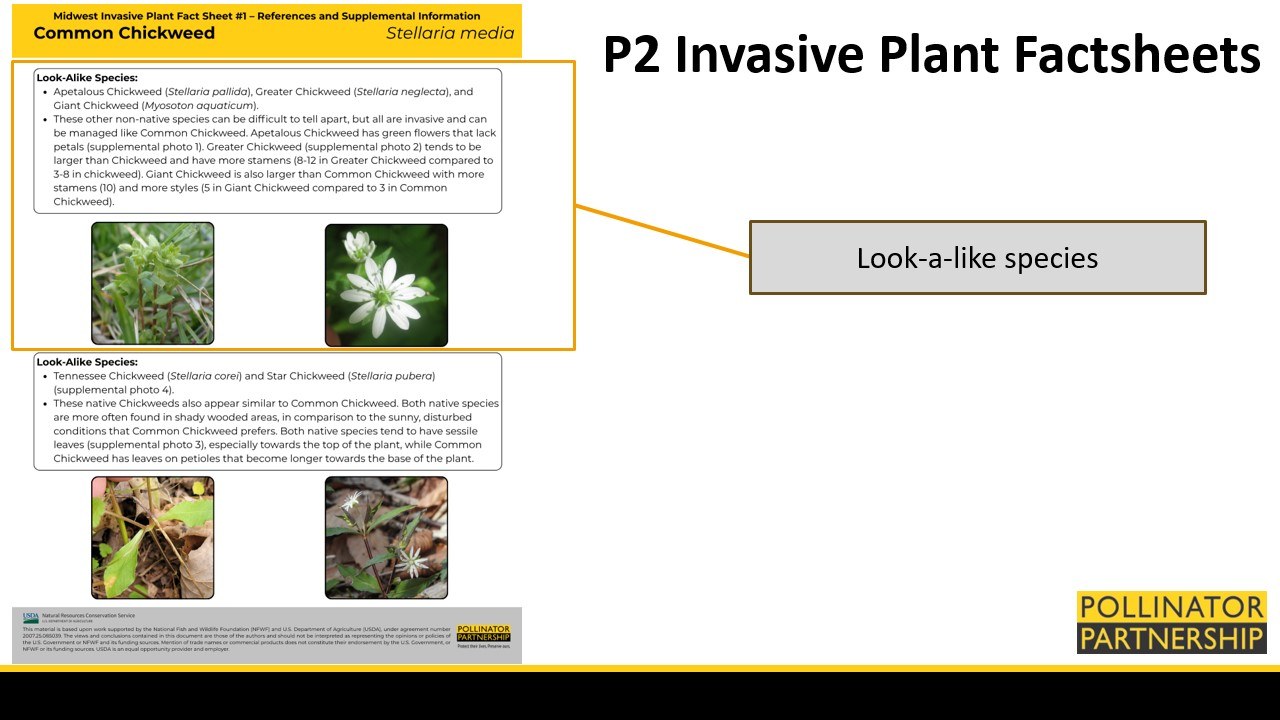
Pollinator Partnership (P2) has resources that can help! P2’s Partner Biologists have created a series of invasive plant management fact sheets as part of our Midwest Technical Assistance (MTA) and Western Technical Assistance (WTA) grants. There are 10 invasive plant fact sheets featuring species in the West, and 10 in the Midwest! Check out our breakdown of the fact sheets below:
Do you have questions about invasive plant species or creating pollinator habitat in your area? Contact one of our Partner Biologists for more information!
Isabel Nazarian (Midwestern US) - isabel@pollinator.org
Lacey Smith (Northeastern US) - lacey@pollinator.org
Emily Carlson (Oregon / Western US) - ecarlson@pollinator.org
Clara Buchholtz (Idaho) - cbuchholtz@pollinator.org
Sophia Sorboro (Ohio) - sophia@pollinator.org
Ella Stroh (Indiana) - estroh@pollinator.org
Midwestern Invasive Plant Fact Sheets