Pollinator Steward Certification ATS Habitat Heroes
There are so many fantastic pollinator projects taking place through our Pollinator Steward Certification (PSC) Agriculture Training and Support (ATS) program as participants complete their habitat and outreach activities. We wanted to highlight some especially impactful projects in our Habitat Heroes series. Check out their work below!
Susan Nutter
Photo credits: Susan Nutter
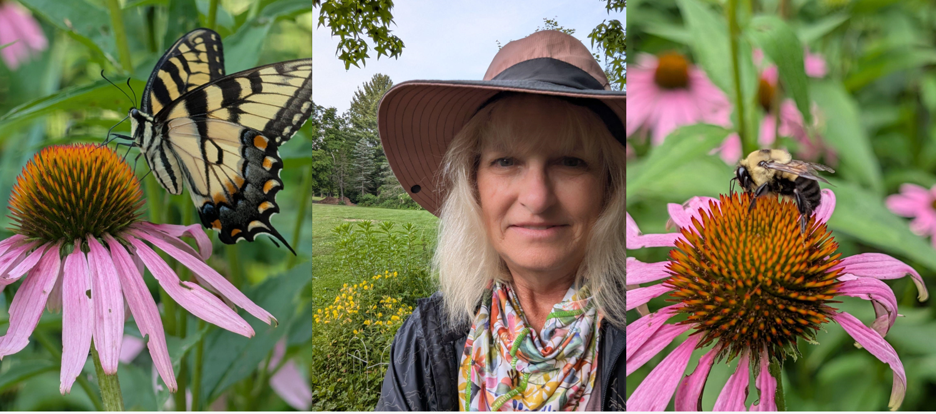
Susan Nutter lives on her family’s three generation tree farm – Trees & Bees in Lisbon, OH – where she keeps bees, cares for the trees, and has undertaken many efforts to support the health of generations to come. She’s taken the Pollinator Steward Certification twice – out of curiosity and a desire to learn – and continues to expand upon her efforts to support pollinators. Growing up, Susan studied the plants and creatures around her with fascination, and grew an affinity for bees. This curiosity followed her into adulthood and manifested into Monarch tagging projects with her kids, over 40 bee hives she currently tends to, and acres of pollinator habitat.
Photo credit: Alyson Wakeen
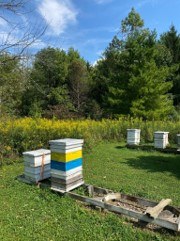
Trees & Bees is home to acres of white pines (Pinus strobus), a grove of sugar maple (Acer saccharum) trees, pawpaws (Asimina triloba), and an abundance of goldenrod (Solidago sp.) and other plants for pollinators. “As a beekeeper you become attuned to weather and what blooms when,” Susan noted while sharing about the work she's done to care for her bees and add species to the plots of habitat around the farm. She’s currently working with NRCS to establish an additional two acres of native pollinator habitat on her farm to provide additional blooms and species diversity.
Partnerships are important in conservation work, and the impact of collaboration is often far greater than work done in solitude. Susan has partnered with Monarch Watch multiple times, first as a waystation – tagging Monarchs (Danaus plexippus) with her kids – and later as the recipient of 300 milkweed (Asclepias spp.) plugs to add to existing habitat on her farm, providing valuable resources for Monarchs passing through.
Photo credits: Susan Nutter
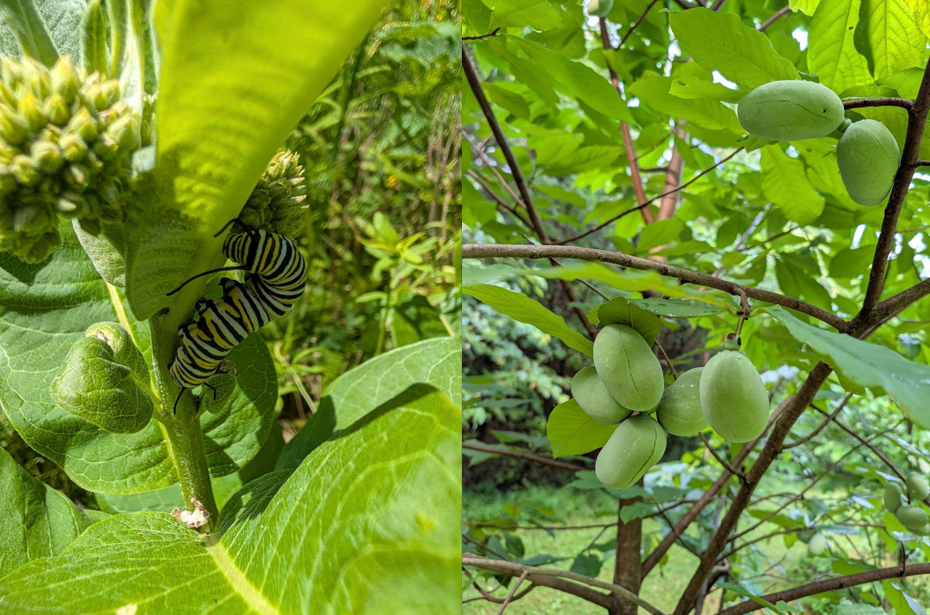
This Fall, Susan has a particularly exciting collaboration coming to fruition. Common Pawpaw (Asimina triloba) is Ohio’s only native fruit tree and the exclusive host plant to the Zebra Swallowtail (Eurytides marcellus). This Fall, Susan plans to welcome a handful of Zebra Swallowtail chrysalises to overwinter on her farm. Her hope is that the species will survive and eventually thrive on her farm, utilizing the Pawpaw grove she planted years ago as a nursery for future generations of Zebra Swallowtail. Susan’s journey of pollinator stewardship has been led by curiosity and a desire to learn and do good – principles we can all stand behind. Over time, this curiosity and desire has created a haven where butterflies, bees, and trees all have a starring role in the symphony of life at Trees & Bees Farm.
Jeremy Farrar
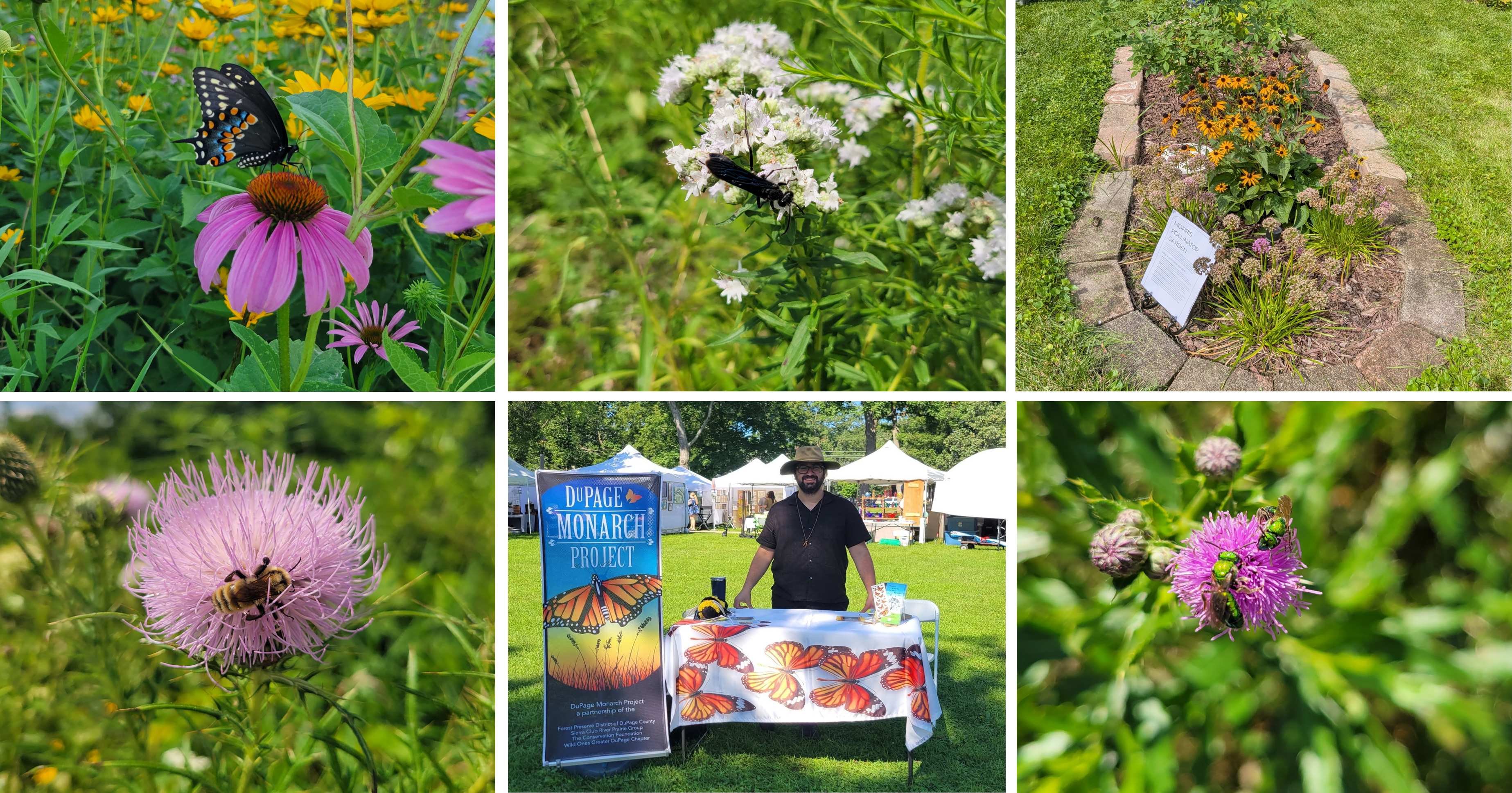
Jeremy Farrar is a social media manager, pollinator lover, and volunteer for the DuPage Monarch Project located in Villa Park, IL. He attended Pollinator Partnership’s Pollinator Steward Certification (PSC) in September 2025. Read on to learn more about Jeremy’s work:
Why did you sign up for the Pollinator Steward Certification workshop?: I attended the PSC workshop in Chicago last fall and continue to highlight the benefits of being certified alongside connecting to other pollinator lovers. Having spent a year volunteering for DuPage Monarch Project, a pollinator nonprofit, I knew I wanted to make our content and presentations more impactful. This workshop gave me the deeper insights and specific details I was looking for to create stories and conversations about pollinators.
Tell us about your outreach and habitat projects: I’ve been a social media manager for years, so when the opportunity arose to volunteer with the DuPage Monarch Project, I jumped at the chance! What started out by sending photos to the director eventually led me to my current role as Content Manager. Whether I'm highlighting beautiful spaces, our member organizations or pollinators themselves, we aim to remind folks of the importance and beauty of pollinators while encouraging everyone to increase landscapes for pollinators to thrive!
I’m most excited about our recent expansion, internships! I’ll be mentoring 3 different creative interns to amplify our message, educate the community, and partner with our member organizations and individuals to restore habitat for pollinators. Together with 6 our butterfly and bumble bee surveyors, there will be so many stories to showcase!
This summer I’ve taken part in the Festival of the Arts in Glen Ellyn and Pollinator Fest in Westmont. Downtown Glen Ellyn dedicated summer 2026 as the “Summer of the Monarch” and featured an entire area dedicated to Monarchs @ The Lake at their festival. Where we discussed monarch’s migration, habitat, best practices, attended a storytime, and watched children paint monarchs.
By the time you’re reading this, we’ll have wrapped up our Biking & Butterflies ride along the Illinois Prairie Path! Where I cohosted, organized, and presented for a group of enthusiasts as we cruised the trail stopping along the way to learn about remnant prairie patches, local history, and spot pollinators.
Additionally, I gifted my mom a few Dupage County native plants for Mother’s day, and she planted them together in a single bed. What started as Prairie Smoke, Coneflower, and Illinois Rose has now grown to include alliums, butterfly milkweed, and Black-Eyed Susans. I’m looking forward to the additional pollinators visiting us once those roots get established!
Photo Credit: Jeremy Farrar
Crystal Siltman
Crystal Siltman is a farmer and gardener at The Land Connection, Old Moon Medicinals, and in her personal life located in Champaign, IL. She attended Pollinator Partnership’s Pollinator Steward Certification (PSC) virtual workshop in Spring 2026. Read on to learn more about Crystal’s work:
Photo Credit: Crystal Siltman
Why did you sign up for the Pollinator Steward Certification workshop?: I have long been cognizant of the importance and urgency of saving our pollinators and have been mindful of such in my own relationship with the land. One of the first events I took part in as a Farmer Training Program Manager at The Land Connection was in collaboration with Pollinator Partnership and that exposed me to your organization and the programs offered. I think this certification can help justify my messy “yarden” while also providing an opportunity to educate and encourage my neighbors and greater community.
Tell us about your outreach and habitat projects: Pollinator outreach is a consistent part of my personal and professional life. As the herb steward at a local community garden, I share information and resources with growers about the benefits of thriving garden ecosystems. Professionally, I’ve hosted events with a conservation focus within farming dynamics to help attendees bridge the gap between agriculture and wildlife habitat.
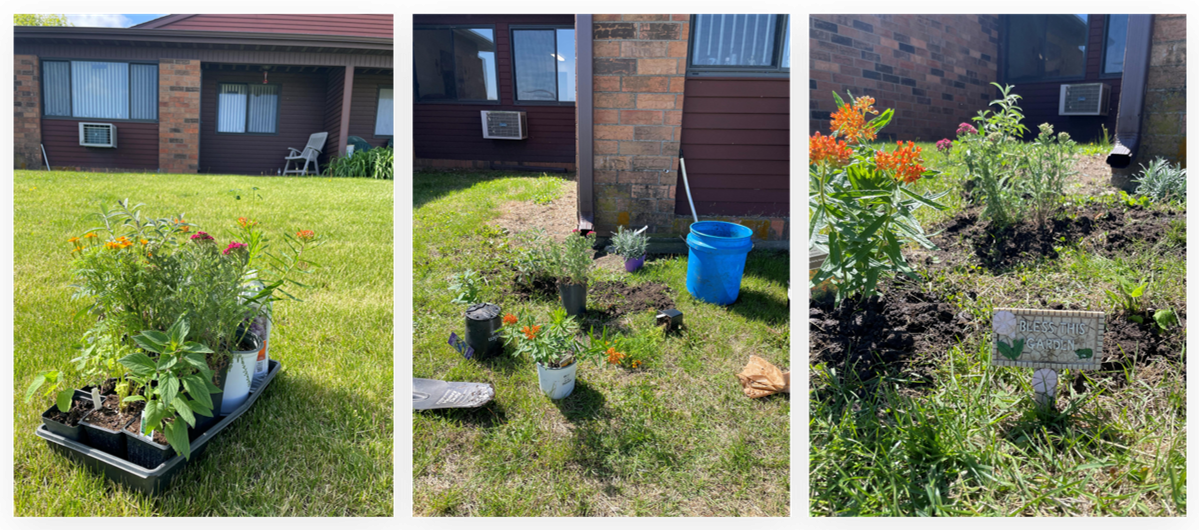
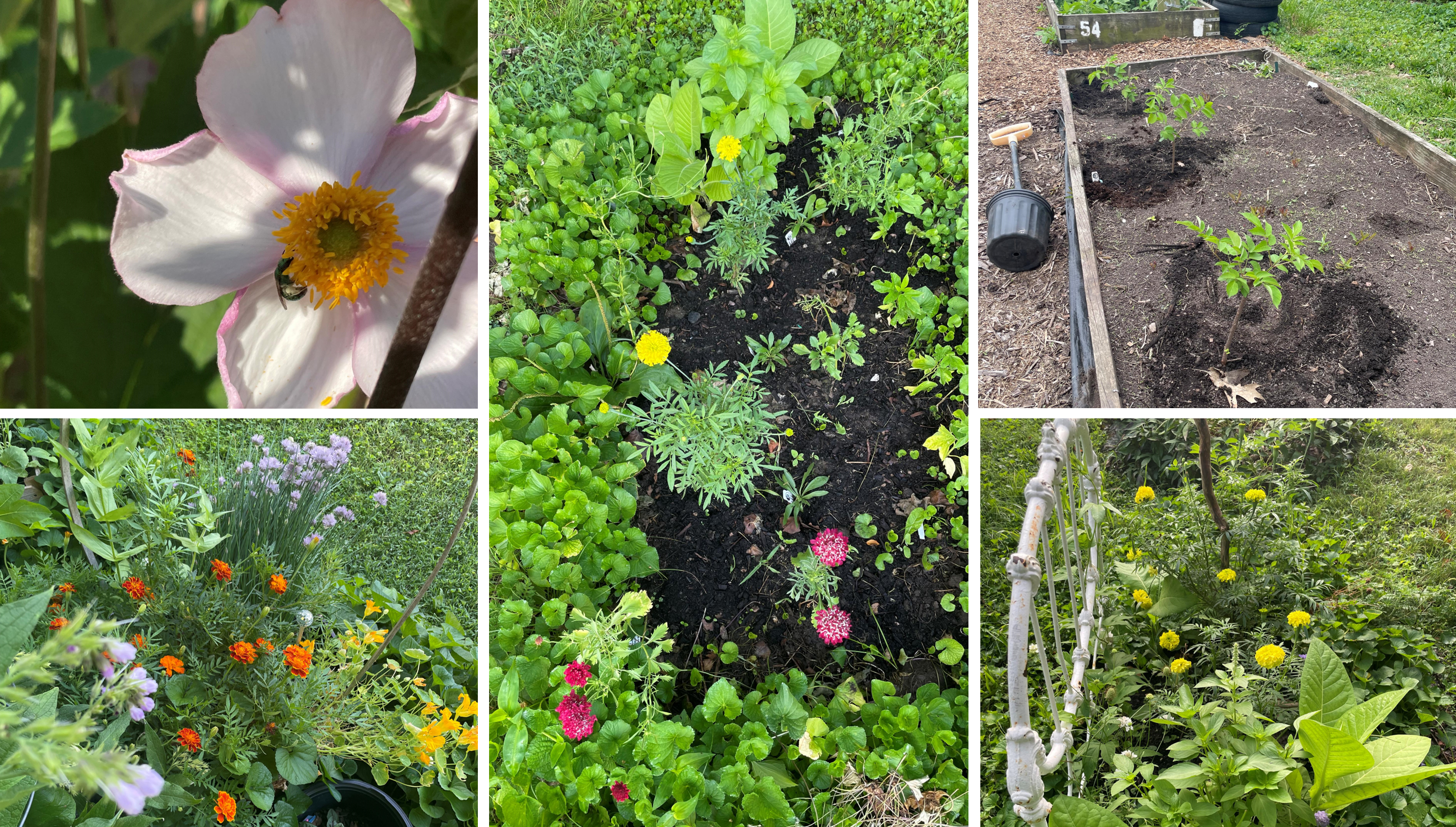
I’ve focused on diversifying the pollinator habitat in my own “yarden” by adding new native and perennial pollinator plants. This ongoing effort has resulted in a noticeable increase in pollinator visits, including bees, butterflies, moths, and other beneficial insects. In a major habitat extension effort, I installed a dedicated pollinator garden at my mother’s senior residence. Due to health issues, she is home more often and the garden was designed to bring hummingbirds, butterflies, and other pollinators directly to her patio allowing her to enjoy them up close from a comfortable, accessible location. This garden adds critical habitat in this residential setting and also enriches her daily quality of life through connection with nature.
Photo Credit: Crystal Siltman
Colleen McVeigh
Photo Credit: Colleen McVeigh
Colleen McVeigh is an educator at DePaul College Prep and an avid community gardner located in Chicago, Illinois. She attended Pollinator Partnership’s Pollinator Steward Certification (PSC) in January 2025. Read on to learn more about Colleen’s work:
Why did you sign up for the Pollinator Steward Certification workshop?: We maintain both pollinator and edible gardens on campus and I sought to enhance my knowledge base about pollinators in both settings. In addition, I assist people in my community to install native planting on their front parkways or yard spaces. The information I obtained through participation in the seminar helped me to enhance my existing knowledge to share with neighborhood gardeners. Across the years, our neighborhood program has converted 50 urban plots to thriving pollinator refuges.
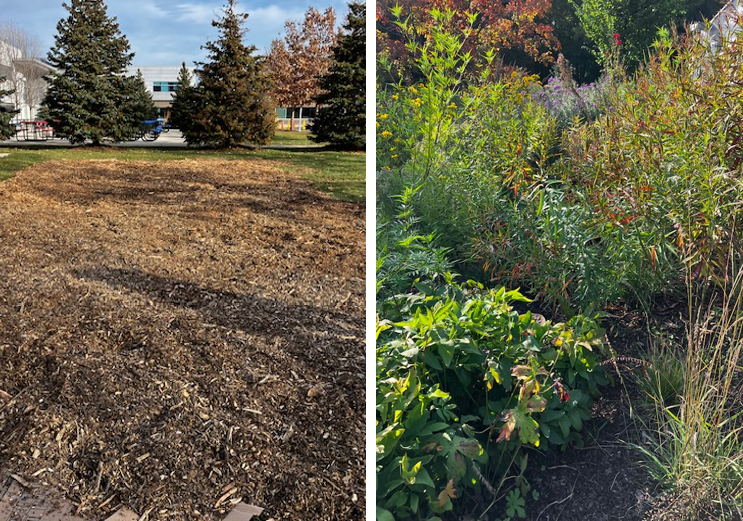
Tell us about your outreach and habitat projects: We have 4 gardens and 12 fruit bearing native trees/shrubs on campus: Edible-utilizing regenerative agricultural practices; Wet-mesic prairie (rain garden) - our largest native garden. There are 8 fruit trees/shrubs on either side of this garden. We planted the garden specifically to benefit pollinators and birds. The plants were chosen not only for their ability to thrive in wet soil, but also whether they were host plants for insects or provided food for either insects or birds. We also developed an oak savanna garden at the base of one of our swamp white oaks on campus. The garden is designed to demonstrate the concept of providing a 'soft landing' area for insects completing their lifecycle. We do not rake or remove leaf litter from under the tree. We have planted the area under the tree with shade loving native perennials. Lastly, students and I are currently in the process of renovating our mesic prairie (pollinator) garden. Unfortunately a couple of years of poor maintenance led to over growth of 2-3 more rambunctious species. Our goal this year is to re-establish plant biodiversity in the garden.
Photo Credit: Colleen McVeigh
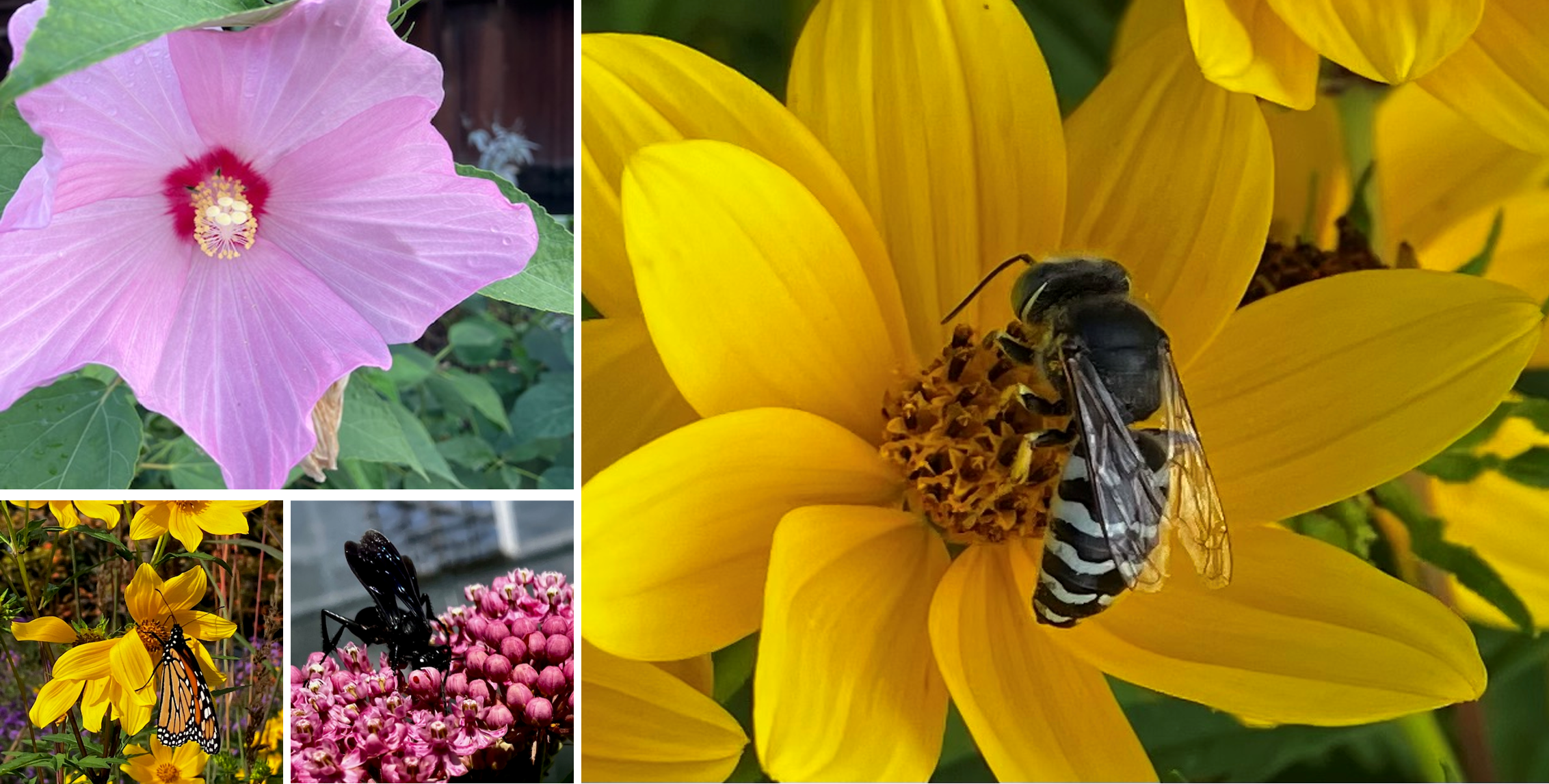
I have 96 students whom I instruct directly. These students maintain the gardens and learn about the connections between pollinator health, garden maintenance, and sustainability practices. After school on Tuesday and Thursdays I host garden groups for the general student population. Students work on maintenance, planting, sowing, seed collecting as well as learning about the underlying principles of each garden.
Heather Alexander
Written by: Alyson Wakeen
Photo credits: Heather Alexander
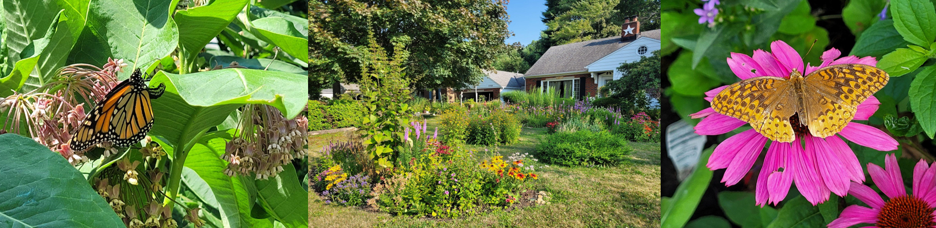
Heather Alexander took interest in native plants over a decade ago – starting small with a few sections in her landscape – and over time has transformed her urban lot outside Cleveland, OH into a pollinator haven with abundant blooms that has also positively impacted others in her community.
In November 2025, Heather took the Pollinator Steward Certification course. Though she’s already a Master Gardener and has learned a lot over the years through gardening and native-scaping, Heather explained, “I’m still continuing to learn new things about native plants and pollinators.” Heather’s brightly blooming yard is living proof of this continuous learning and taking it one step – or plant – at a time.
Photo credit: Alyson Wakeen
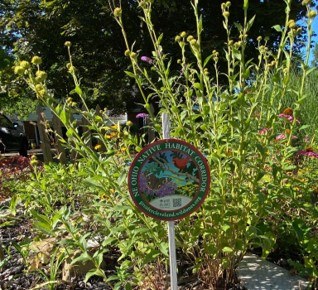
As I meandered through Heather’s gardens, I adored the blazing star (Liastris spicata) erupting like fireworks, towering milkweed (Asclepias syriaca), and hyssop (Agastache sp.) covered in bumblebees. Each bed uniquely adorns the lot with crescent and bean shaped beds, overflowing with life.
I looked at her neighbor’s house next door and a burst of color caught my eye – colorful coneflowers complementing Heather’s yard. Heather shared that as her plants outgrew her own garden, she had plenty to split and share with her neighbors. Whether intentional or not, this small act of sharing is the start of something much bigger: a community habitat corridor.
Habitat corridors are contiguous parcels of habitat that connect fragmented wildlife habitat, allow animals to travel safely, and provide for healthier, more diverse plant communities. For native pollinators, habitat corridors are essential as many native species travel only a few hundred feet as they forage for resources. Habitat connectivity creates concentrated stretches of resources and allows pollinators to thrive without expending additional energy searching for resources.
Photo credit: Alyson Wakeen
Beyond her home garden, Heather’s passion for native plants extends into her work as a Community Life Coordinator at a senior care facility. Shortly after Heather began working, the facility planted a large garden area for the residents to enjoy. “I chose native plants to fill spaces in the garden because of the benefits for pollinators and lower maintenance required,” Heather shared. She weaves these garden spaces into her activities with residents, and even invites garden committee residents to her home to tour her gardens – igniting inspiration and sharing her unique style of gardening and support for pollinators with others.
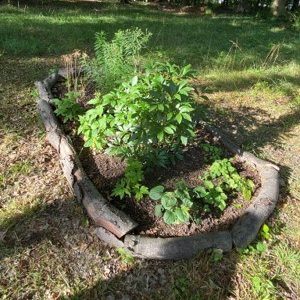
Heather’s project for certification was a shade bed in her backyard – an area that provided its own unique challenges. As she began digging to install the bed, she uncovered layers of sandstone pavers hidden under inches of dirt – artifacts from the home’s previous owner. This led her to pivot, shift the garden’s location, and create something that would actually work with her site. This ability to pivot, accepting to work with the characteristics of a site, is key in creating habitat at home.
It’s easy to take interest in native plants and soon become overwhelmed by the process of establishing habitat – this is a common narrative, and one that I often see challenging people while taking the first step. Heather’s journey illustrates the impact of many small steps taken over time, and a love for the process of it all.
Carolee Kokola
Carolee Kokola is the Director of Enterprise Operations at Bubbly Dynamics, a social enterprise creating replicable models for sustainable urban industrial development. The most well known project coming from Bubbly is The Plant located at 1400 W. 46th St., Chicago IL 60609. Carolee joined us as a speaker/attendee for the January 2025 Pollinator Steward Certification workshop and then as a host the following September! Read on to learn more about her work both at home and at The Plant:
Why did you sign up for the Pollinator Steward Certification workshop?: Actually, I was invited to present to the workshop about The Plant, a food-production facility with indoor and outdoor farms in the Back of the Yards neighborhood of Chicago, and I wanted to join in after seeing the details about the program! I don't have a yard but have enjoyed planting in containers and pots, and I thought this would be a good opportunity to up my game and learn more about pollinator-friendly gardening. It was an engaging workshop with interesting speakers and lots of hands-on things to look at up close, like specimens of bees and other insects.
Even after the workshop, I did first make the mis-step of buying a general wildflower seed mix -- if you're buying a mix, be sure to look for native seeds specific to your region. The Pollinator Partnership's regional guides are great resources to get you started.
Tell us about your outreach and habitat projects: I have shifted from planting starters in my limited outdoor space to scattering native wildflower seeds in my own planters and beyond in my neighborhood: in parkways, tree grates, neglected fencelines, and weird old bits of City infrastructure that present opportunities for informal planters with just a little soil and seeds. It rained a lot this summer, but last year I would just take a watering can with me on evening walks. I still include some herbs in my own planters but have enjoyed the wild tumble of pollinator-friendly plants that springs forth and attracts pollinating insects and birds galore!
At The Plant, realizing that beneficial plantings tumbling over our front fence onto the sidewalk were being perceived by neighbors as "weeds", I found an opportunity to provide educational outreach, collaborating between Bubbly Dynamics (the owner/operator of The Plant) and Patchwork Farms. Their farmers provided info about various plants to help identify them (with their common and Latin names) as well as describe medicinal properties and other details about their benefits. Then the Bubbly team assembled and finalized the content, laying it out for printing by Snail Catalog, a design studio focused on sustainable practices, who printed the text on reclaimed corrugated plastic in welcoming, bright colors.
One of the speakers at the workshop discussed the cumulative impact of planting different species of pollinator-attracting plants in a given neighborhood, which I think about a lot, especially now that my parkway plantings and gigantic sunflowers have been a conversation starter with my neighbors. I've noticed a few neighbors expanding their gardening footprints as well -- there are lots of opportunities for micro-gardens when you look!
Photo Credit: Carolee Kokola
Matthew Santiago Meifert
Matthew Santiago Meifert recently graduated from DePaul University, is currently doing entomological survey work and invasive species monitoring in northeastern Illinois for the USDA, and is an active volunteer with El Paseo Community Garden located in Chicago, Illinois. He attended Pollinator Partnership’s Pollinator Steward Certification (PSC) in September 2025. Read on to learn more about Matthew’s work:
Why did you sign up for the Pollinator Steward Certification workshop?: I signed up for the pollinator steward certification course so I could obtain a more comprehensive view of ongoing efforts, local initiatives, and better tools and vocabulary for communicating with others.
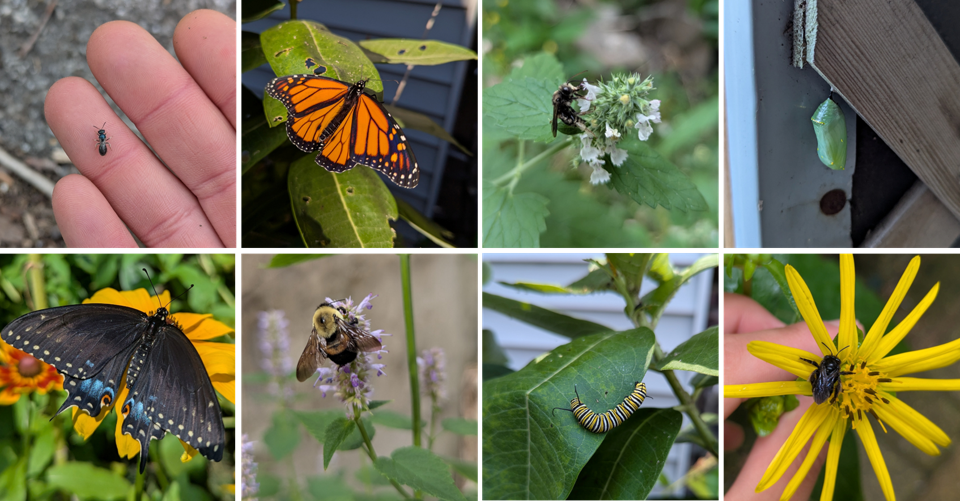
Tell us about your outreach and habitat projects: The work we've done ourselves (at home) is largely in our small urban garden space where we've been letting it grow pretty wild. This year, we even had a colony of Bombus bimaculatus nest under the brick foundation of the garage! I've been trying to document as many insect species as possible. Speaking within the realm of pollinators: B. bimaculatus, B. griseocollis, B. impatiens, Danaus plexippus, Papilio polyxenes, Spilosoma virginica, Lampyrinae spp., Megachile spp., Melissodes bimaculatus, Ceratina spp., and many parasitoid wasps. Not a comprehensive list, but exciting nonetheless.
Our degraded, poor quality soil is home to an increasing number of native plants and food crops for ourselves and the insects/arthropods. I've stuck with ones that are fairly easy to establish or tolerate sunlight deprivation. Common milkweed is doing very well, and there is cup plant, elderberry (new this year), thornless blackberry, raspberry, black eyed susan, sunflowers, borage, Anise hyssop, flowering herbs (mint, basil, parsley, dill), pole beans, and plenty of "weedy" vegetation we try to manage. A few oak seedlings have popped up, though it's unlikely they will survive. If we didn't rent, I'd want to do more. This transformation took place over the past 5-6 years after a gigantic tree of heaven fell into the yard and partially damaged the building. After the tree was removed, we took it upon ourselves to clean up the remaining debris and utilize the disturbed soil to our advantage. It's been a joy to observe the phenology of the visitors and residents of our garden! We are also raising close to a dozen monarch caterpillars and a few swallowtails right now.
Photo credits: Matthew Santiago Meifert
Steve Lane
Steve Lane
Written by Alyson Wakeen
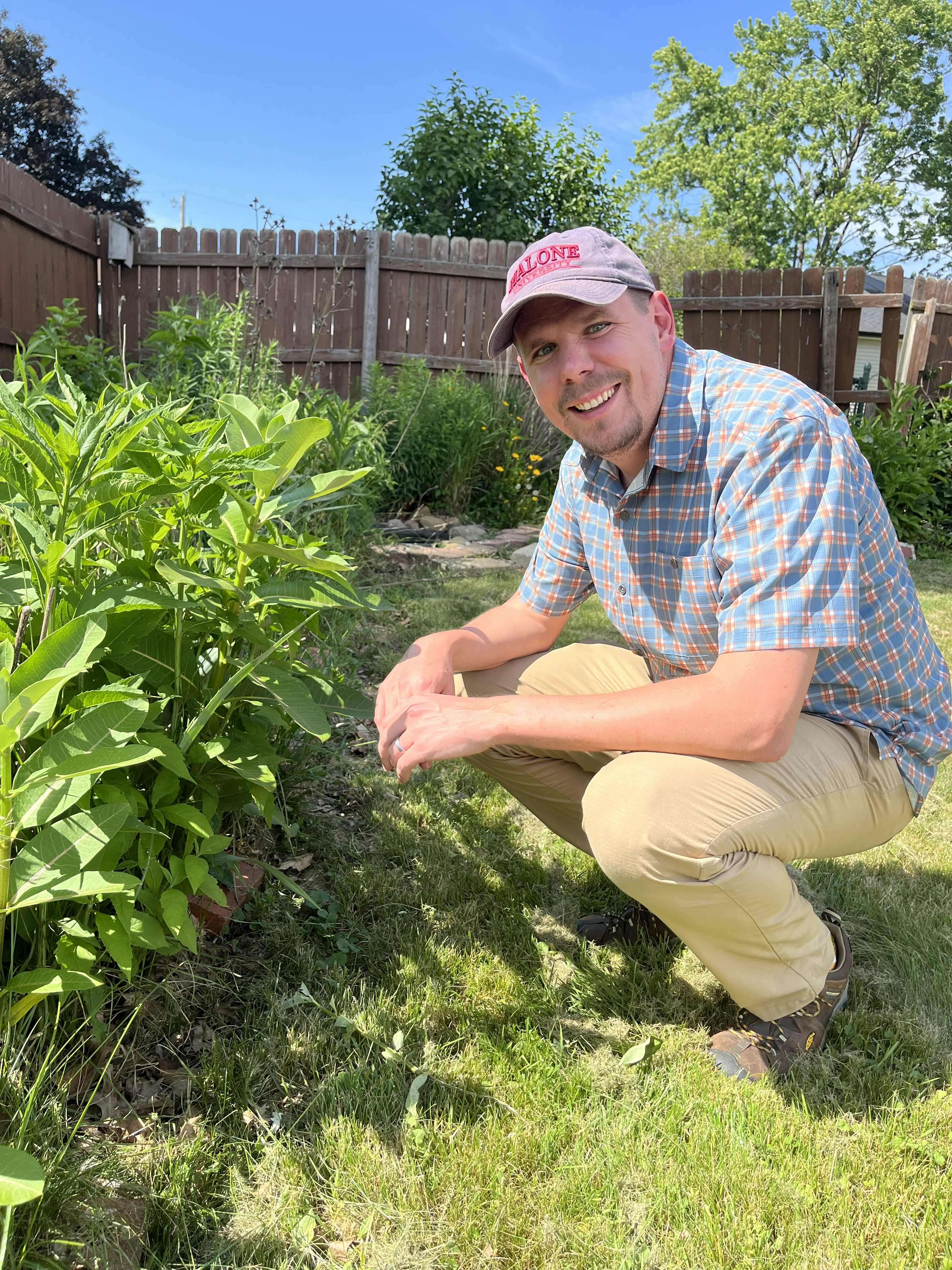
Nature tells a story… about the people who cared for it before us, the creatures who call it home today, and for the future generations, a glimpse into our actions today. Steve Lane attended Pollinator Partnership’s Pollinator Steward Certification (PSC) in November 2024 and wasted no time afterward getting into action. When asked what inspired his involvement, Lane shared about the story that nature tells and proposed the question “What story does a lawn tell?”. Barren, uniform, lacking inspiration.
“Aw and wonder is an important part of being human” Lane said, fueling the way we connect, create, and view the world as a whole. Native habitat tells a much different story than turf grass… one of life, diversity, and abundance.
When Lane moved from Baltimore, MD to Canton, OH, he knew he finally had a chance to “do something good” and tend to the land in a meaningful way. He began incorporating native plants in his backyard with inspiration from Doug Talamy’s infamous “Homegrown National Park”. When he came across an opportunity to take the PSC in-person he knew he had to seize it and thus, he and his wife, Amber, drove an hour each way for multiple days to take the class.
Their project for certification poured back into their community with a pocket meadow on Malone University’s campus in Canton, Ohio, enrolling the help of local preschoolers to plant the site. The seeds they sowed transformed a bed that was once hard to cultivate due to stormwater washout into a pocket full of life. Now, the site boasts false sunflower (Heliopsis helianthoides), lanceleaf coreopsis (Coreopsis lanceolata), New England aster (Symphyotrichum novae-angliae),common milkweed (Asclepias syriaca), and more.
Photo credits: Alyson Wakeen
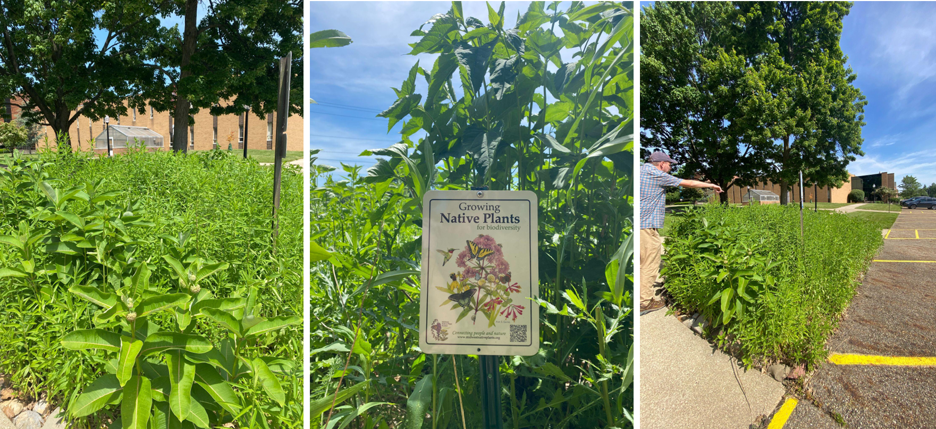
Even moreso, the site has provided an educational opportunity for Lane’s college students. During his Spring Beekeeping course, Lane teaches students about not just honey bees, but native pollinators as well. One of the exercises the class undertakes is a campus search for native bee habitat – hollow stems for nesting, native plants for forage – and concludes the exercise at the native habitat he created, explaining how our typical style of landscaping – lawn, hostas – creates a barren desert for pollinators.
“Students have enjoyed learning about natives and it brings up an important discussion about the pros and cons of honey bees”. Lane’s approach to education exemplifies how honey bees can be a gateway for deeper learning and connection with native plants and pollinators. Afterall, “you’d be surprised how far a jar of honey can get you”.
Future plans on campus include a native landscaped patch outside their science building, a large meadow surrounding the apiary, and even applying for Bee Campus certification within the next year – enrolling their grounds crew and professors across disciplines to oversee the certification. Steve Lane’s PSC journey is one of curiosity and community connection, showcasing how each small step can accumulate into something much bigger than we’d ever expect.
Chris Baran
Chris Baran of Resilient Design, LLC located in Chicago, Illinois attended Pollinator Partnership’s Pollinator Steward Certification (PSC) in January 2025. Since his participation in the first workshop, he’s returned as a speaker twice to help share his knowledge about creating habitat to other PSC attendees! Read on to learn more about Chris’ work:
Why did you sign up for the Pollinator Steward Certification workshop?: As an ecological horticulture firm, supporting pollinators through our work has always been of utmost importance. The Pollinator Steward Certification was a perfect match for our business. I love the vote of confidence it gives our clients when partnering with us and have found it to be a great selling point when we bid on projects. I have also had the pleasure to come back and participate in the program as a workshop speaker and share my experience with others.
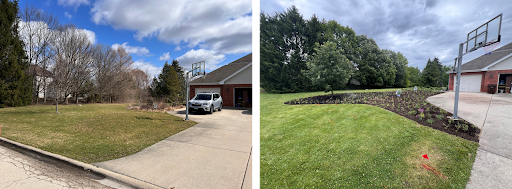
Tell us about your outreach and habitat projects: One of our favorite habitat projects is a large residential garden we created for clients in New Lenox, Illinois. The clients are avid native gardeners and pollinator lovers and had originally contacted us to help give a professional makeover to an existing pollinator garden in the front yard and to refresh the foundation plantings at the front of the house.
During the design and consultation process, we started discussing the two oak trees the clients had planted towards the front of the property to flank the house. Originally the area that these oaks were in was out of scope for the project and would have been left on their own surrounded by turf. Seeing that this wasn’t ideal for all of the insects that rely on the oaks as a host plant, we proposed stretching the new gardens out to include the oaks as part of the project, giving the many larvae “soft landings” under the oaks to fall into as part of their life cycle. The clients loved this idea and we came up with a design to include sedges and rushes under the trees. This garden, and its inspiration, has become one of our signature projects, and it all resulted from our taking a cue from our pollinator friends and their needs.
Photo Credit: Chris Baran
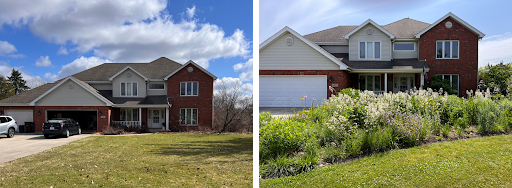
Photo Credit: Chris Baran
Emily Greve & Diana Alexander, Mill Creek MetroParks
Photo credits: Emily Greve
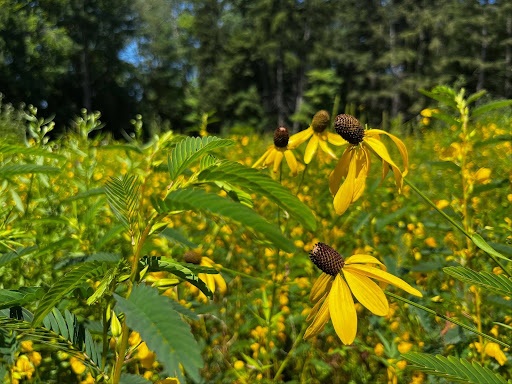
A single certification sparked new pollinator gardens, inspired hundreds of community members and gave two Ohio naturalists new ways to help people connect with nature. Emily Greve and Diana Alexander – naturalists at Mill Creek MetroParks (MCMP) in Youngstown, Ohio – participated in the Pollinator Steward Certification (PSC) in November 2024. Both Emily and Diana went on to complete the certification and implement the knowledge gained into their outreach and education efforts at MCMP.
“As an environmental educator, it is important to have a broad range of knowledge to share about the natural world with our audiences. … Being able to dedicate the time to focus on this subject alongside other community-minded individuals deepened my knowledge and boosted my confidence in teaching about our local pollinators.” Greve said.
Photo credits: Emily Greve
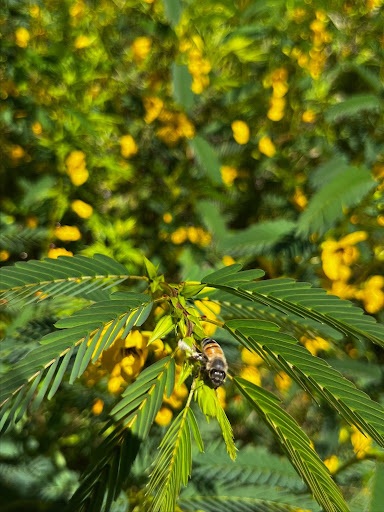
At a time when pollinators face habitat loss across North America, educators like Greve and Alexander are helping communities become part of the solution. Greve enhanced the park’s Ready, Set, GROW! program, a weekly gardening program for families, with lessons focused on pollinators, how they benefit gardens, and how native plants can support them. With the help of volunteers, and Greve’s expert guidance, the group planted a 30 sq. ft. garden bed with native Ohio plants to attract pollinators!
Alexander has fond memories of helping MCMP’s Natural Resources Manager and partners to spread native seeds in one of the park’s established meadows – York’s Tranquil Meadow. “There were about four or five of us working in the meadow one fall day, happily scattering seeds to help them overwinter.” Alexander shared “The Common Milkweed seeds, with their fluffy, lightweight fibers, floated through the air, landing on us and sticking to our clothes. Before long, we were laughing and giggling as we found ourselves covered in fuzzy seeds. Then we heard others laughing nearby. A group of visitors at the nature center had stopped to watch us and was enjoying the unexpected sight of all of us frolicking through the meadow covered in milkweed fluff. It became a moment of shared joy between us and the visitors – a memory that will last a lifetime.”
York’s Tranquil Meadow in Bloom – Photo credit: Emily Greve
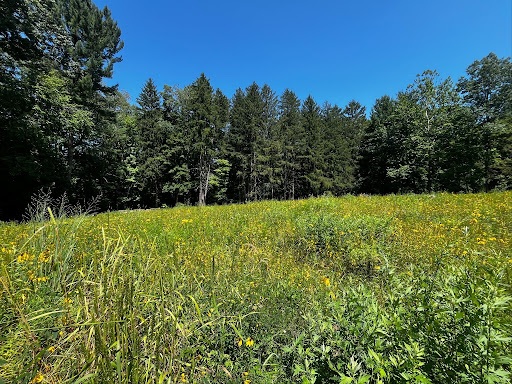
Environmental stewardship comes to life when we engage our community and find play in the simple actions, like spreading seeds on a chilly Fall day. “This experience is a reminder that supporting pollinators and restoring native habitats does not always have to feel like difficult work. It can also be a meaningful, joyful experience filled with laughter, connection, and moments of wonder shared with friends and the community.” Alexander added.
Each Summer MCMP’s Education Department organizes Bug Day, an event celebrating the diversity and importance of bugs with a day of learning and fun. This year, Bug Day attracted over 300 participants and highlighted pollinators with activities such as a live demonstration hive, monarch butterfly and caterpillar interactions, and other arthropod-themed crafts and games.
Participants learning at Bug Day – Photo credit: Emily Greve
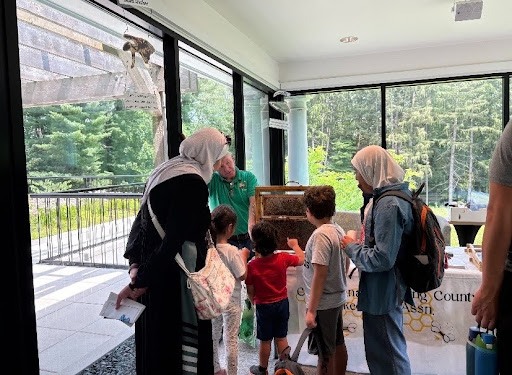
“This year's Bug Day was a great success.” Greve noted, and already their team is planning for next year’s Bug Day festivities on July 17th, where they’ll have educational fun and games, and the York’s Tranquil Meadow can be seen in full bloom.
Months after those milkweed seeds floated through the autumn air, York's Tranquil Meadow now hums with bees and butterflies. The laughter from that afternoon has faded, but the seeds, and the curiosity they inspired continue to grow. One of the best parts about stewarding our natural spaces is that the learning never ends – there’s seemingly endless species, ecosystems, and layers to dive into, learning more about ever-changing landscapes and the critters who call them home.
Greve and Alexander exemplify one of the highest qualities of great naturalists: curiosity. Curiosity to learn and a passion to pass on what they discover – simple actions that create ripples of impact in their community.
Jessica Davis
Jesscia Davis is the Development and Programs Manager at Global Garden Refugee Training Farm located in Chicago, Illinois. She attended Pollinator Partnership’s Pollinator Steward Certification (PSC) in January 2025. Since her participation in the first workshop, she’s returned as a speaker to tell us more about Global Gardens and how they’ve implemented more pollinator habitat since she attended the workshop! Read on to learn more about Jessica’s work:
Why did you sign up for the Pollinator Steward Certification workshop?: I signed up for the Pollinator Steward Certification workshop because I was interested in learning more about how my farm, Global Gardens Chicago, can help pollinators and how pollinators can help us. As a farm that uses organic practices, it’s important for us to explore ways that we can be in community with the natural world and find ways to mutually benefit one another.
Tell us about your outreach and habitat projects: Prior to the pollinator training, Global Gardens had just one small 6 ft. x 6 ft. plot of pollinator plants. In 2025, we received a grant called “Designing a Better Chicago” from the Chicago Design Museum, which allowed us to expand our pollinator garden to 1,108 sq. ft. throughout the garden. We are currently in the process of installing educational signage to teach visitors about native pollinators in Illinois and how they can help support them. We have also begun a community science program to track the pollinators that visit our garden from year to year as our native gardens grow stronger. If you’re interested in becoming a community scientist through our pollinator program, please email jessica@globalgardenschicago.org.
Photo Credit: Jessica Davis